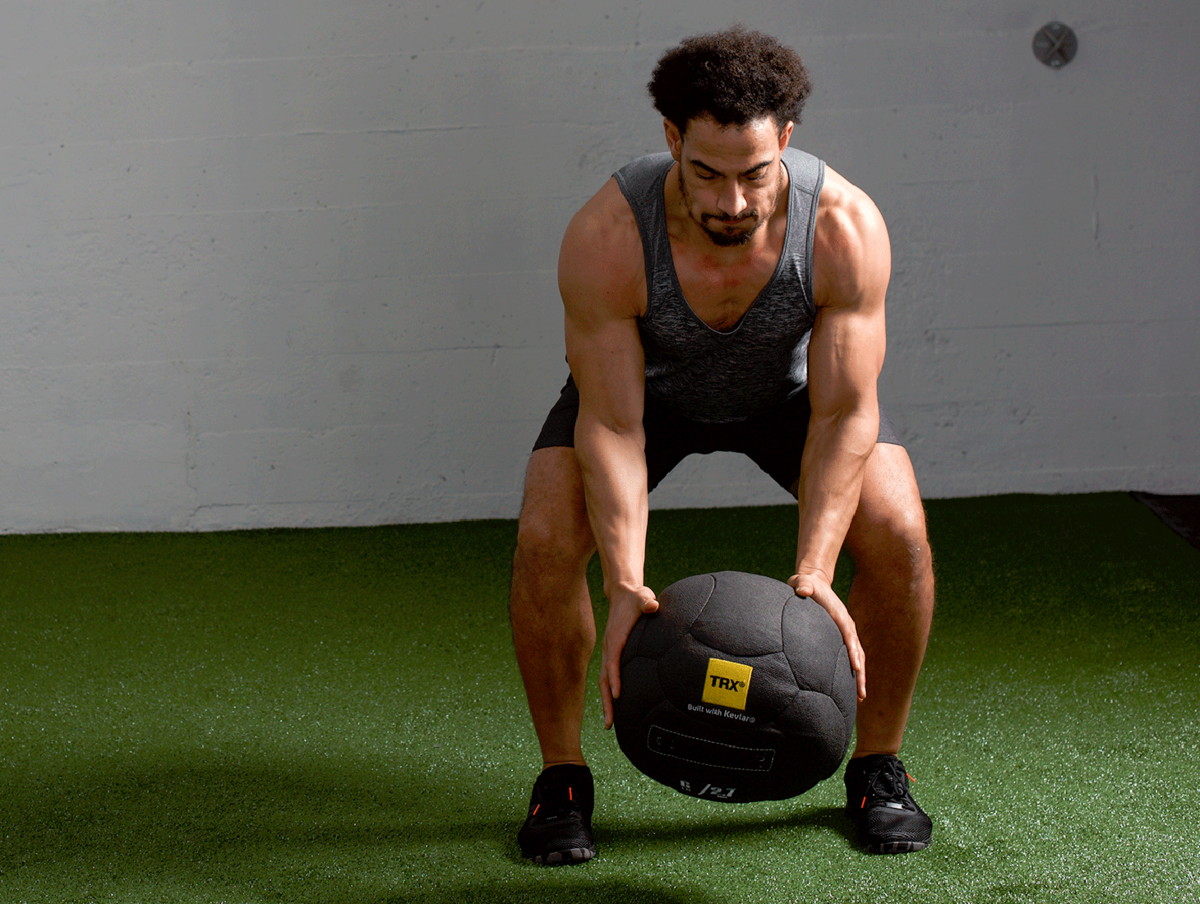

10. Goblet Squat
The goblet squat keeps the load close to the center of your body. This position makes it easier to train your quads with an upright torso. Use one dumbbell or kettlebell, and choose a depth you can control.
Here’s how to do a goblet squat.
-
Set your feet slightly wider than hip-width apart, with your toes slightly turned out.
-
Hold one dumbbell vertically in front of your chest by its top end.
-
Keep your elbows tucked in and your spine neutral.
-
Send your hips back and bend your knees while keeping your torso upright.
-
Keep your knees tracking in line with your middle toes throughout the movement.
-
Pause at the bottom of the squat while keeping your heels grounded.
-
Press through both feet to stand, then repeat.
Form tip. Bring your elbows inside your knees if your mobility allows. Work through your full range without compromising form.
Alternative: Dumbbell Front Squat
The front squat moves the load from one weight at your chest to two dumbbells at your shoulders. ACE classifies the dumbbell front squat as an intermediate movement, so get comfortable with your goblet squat first.
Use the ACE dumbbell front squat guide as a visual reference, then follow these cues.
-
Stand with your feet slightly wider than hip-width and curl the dumbbells to the fronts of your shoulders.
-
Brace your core, keep your chest tall, and spread pressure evenly across both feet.
-
Bend your hips and knees together, lowering only as far as you can keep your heels down and knees tracking with your toes.
-
Push the floor away to stand, keeping your hips and torso rising together.
Form tip. If two dumbbells pull you out of position, return to the goblet squat and build control before trying again.
9. Split Squat
Compared with the Bulgarian split squat, the split squat uses a more stable position because both feet stay on the floor. This unilateral exercise lets you train one leg at a time and notice differences in control or strength between sides. Use a load that lets both sides follow the same range and tempo.
Here’s how to do a split squat.
-
Stand in a split-leg position. Imagine your feet are on two train tracks to aid balance.
-
Brace your core and avoid rounding your spine.
-
Bend your knees to lower your hips.
-
Pause at the bottom while working through your full range of motion.
-
Stand back up to return to the start position and repeat.
Form tip. Watch the tracking of your front knee. Keep it moving in line with your middle toe before you progress to dynamic lunges.
8. Dumbbell Sumo Deadlift
The dumbbell sumo deadlift uses a wide stance and combines a knee bend with a hip hinge. Choose it when you want one compound pattern that trains several lower-body muscles.
Here’s how to do a dumbbell sumo deadlift.
-
Set your feet wider than shoulder-width apart with your toes slightly turned out.
-
With your feet on either side of the dumbbells, hinge and bend your knees. Grip the handles, keeping your arms inside your legs and your back straight.
-
Brace your core, then extend your hips and knees to stand upright.
-
Hinge at the hips and bend your knees to return the weights to the floor, then repeat.
Form tip. Keep your feet planted and track your knees with your toes as you stand and lower the dumbbells.
7. Dumbbell Single-Leg Squat
The dumbbell single-leg squat is an advanced movement that demands strong balance and mobility. Hold a light dumbbell as a counterbalance, or use bodyweight until you can control the range.
-
Holding your weight close to your chest, stand on one leg and fix your gaze straight ahead.
-
Bend your standing knee and flex your hip to lower with control through your full range of motion.
-
Keep your free leg off the floor throughout the exercise.
-
Pause at your end range, then press through your standing leg to rise. Complete your target repetitions on both sides.
Form tip. Hold the TRX Suspension Trainer™ handles for light support as you practice balance and gradually increase your range.
6. Dumbbell Forward Lunges
The lunge is similar to the split squat, but it adds a dynamic step under load. Master a stationary split squat first. Add the forward step once you can keep your front foot planted and your knee tracking with your toes.
Here’s how to do dumbbell forward lunges.
-
Select your weight. Hold one dumbbell in each hand or one dumbbell close to your chest.
-
Begin in a standing position with feet hip-width apart.
-
Step forward. As your foot lands, bend both knees to lower your body.
-
Press through the front foot to return to the start position, then repeat.
Form tip. Move down and up in the lunge rather than forward and back.
5. Step-Ups
The step-up is a unilateral strength exercise you can scale by changing the platform height and dumbbell load. A lower platform reduces the range of motion. A taller platform requires more knee and hip flexion. Choose a stable surface and a height that lets you rise without pushing off the floor with your trailing foot.
-
Place one foot on the platform, press through the whole foot, and find a stable starting position.
-
Drive through the working leg to stand. Keep the foot on the floor light to limit assistance.
-
Slowly lower back to the start position and repeat.
Form tip. Try using a TRX Suspension Trainer™ for light support. Adjust the handles so the straps stay in line with the platform, then use only enough assistance to lower with control.
4. Single-Arm Hang Snatch
The single-arm hang snatch is an advanced full-body power movement rather than a direct quad-isolation exercise. It moves a dumbbell overhead through fast extension of the hips, knees, and ankles. If you’re new to loaded leg training, use a goblet squat and return to the snatch after you’ve built solid squat mechanics and overhead control.
-
Stand with your feet shoulder-width apart and your toes slightly turned out. Place the dumbbell between your feet.
-
Hinge and bend your knees to grip the dumbbell with your palm facing your body.
-
Brace your core and keep your arm straight.
-
Use an explosive drive to triple extend at the ankles, knees, and hips. As you reach full extension, shrug your shoulders.
-
Flex the elbow and drop your body beneath the weight of the dumbbell into a quarter squat position.
-
Catch the dumbbell in an overhead position and stand up to finish the rep.
-
Return to the start position by lowering the dumbbell with control, reset, and repeat.
Form tip. Use your free arm to aid balance.
3. Dumbbell Lateral Lunge
The dumbbell lateral lunge moves side to side in the frontal plane. Step only as far as you can keep the working foot planted and your hips under control. If you want more focused adductor work, try these inner leg exercises before adding more load.
Here’s how to do a dumbbell lateral lunge.
-
Start by standing tall with your feet under your hips. Hold one dumbbell per hand with your arms by your sides.
-
Take a wide step to the side. Keep your hips square, and bend your knee as you sit your hips back.
-
Brace your core to keep your torso upright, and avoid leaning too far forward or rounding your spine.
-
Extend your hip and knee to stand tall. Push off your foot to return to the start position, then repeat.
Form tip. If balance is difficult, hold a wide stance and practice a lateral squat. Add the side step once you can control the motion.
How Do You Use Suspension Support During Single-Leg Quad Work?
Suspension support should steady a single-leg exercise without taking the main load away from your quads. Hold a TRX Suspension Trainer™ with light tension during split squats, step-ups, or single-leg squats. Keep your arms quiet, press through the working foot, and use the straps only when your balance starts to drift. As control improves, reduce hand pressure before adding dumbbell weight or range.
2. Dumbbell Hack Squats
The dumbbell hack squat is a practical variation for home training or a gym without a leg press. Use a stable heel support only when it helps you keep an upright torso and controlled range.
Here’s how to do dumbbell hack squats.
-
Set your heels on two weight plates placed shoulder-width apart, or use a squat wedge.
-
Stand tall, holding a dumbbell in each hand, with your arms straight at the side of your body.
-
Bend your knees to squat as you keep your torso upright.
-
Work to your full range of motion.
-
Drive through your heels to return to the start position and repeat.
Form tip. Keep your torso upright. Adjust the height of the raised platform if you lean forward or backward.
1. Bulgarian Split Squats
A Bulgarian split squat raises your back foot onto a bench, step, or other stable surface. The setup trains each leg separately and challenges your balance through a larger range of motion.
Use this exercise as a progression from the split squat. The extra balance demand may require a lighter load as you learn the setup. Place your lead foot where you can bend the knee comfortably while keeping the whole foot planted.
Here’s how to do Bulgarian split squats.
-
Set your dumbbells in front of the bench after finding your foot placement.
-
Stand facing away from the bench. Place one foot on the bench behind you.
-
Sit on the bench and straighten your lead leg to estimate your starting distance.
-
Plant your lead foot and imagine your feet are on two train tracks to improve balance.
-
Stand up and fix your gaze directly ahead. This is your starting position.
-
Keep your torso tall as you bend your knees to lower through your full range of motion.
-
Press through your lead foot to return to the start position, then repeat.
Form tip. Focus on the lead leg. Use the back leg only for balance, and resist pushing off it.
TRX Training Gear for Dumbbell Quad Exercises
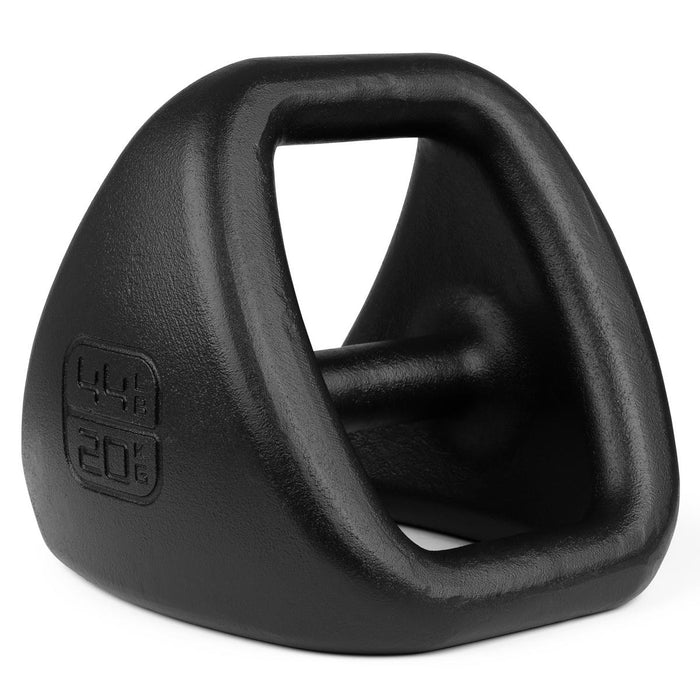
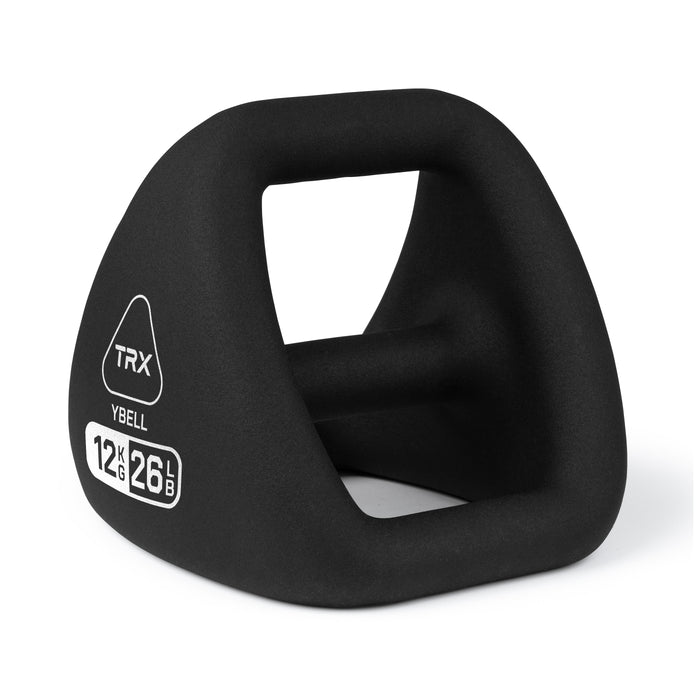
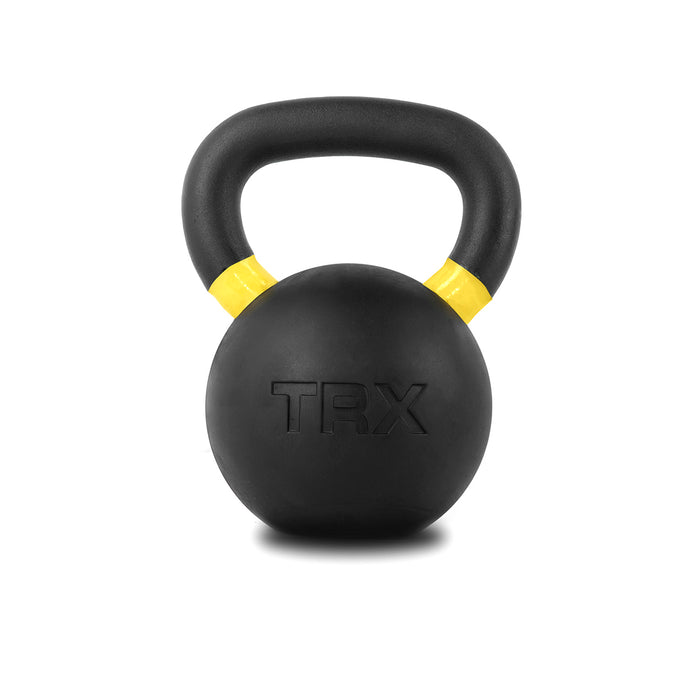
Choose equipment that matches your grip, working load, and storage space. The linked TRX options below include YBell and kettlebell choices for lower-body training.
Here's the gear we recommend you use:
How to Choose Your Dumbbell Weight
Start with a load that lets you complete every repetition with the same foot pressure, knee path, torso position, and tempo. If your range shortens or your balance changes, lower the weight or use fewer reps.
The 2026 American College of Sports Medicine resistance-training update supports individual goals, consistency, and gradual progression instead of one universal prescription. When your target reps stay clean across every set, add a small amount of weight, one or two reps, or one set. Change one variable at a time so you can see how your body responds.
Sample Quad Dumbbell Workout
This quad workout with dumbbells is a flexible template you can adapt. Choose four to six movements that match your experience. Place the most technical exercise first, and keep the final repetitions as controlled as the first.
Grab a pair of dumbbells and try the workout below.
Warm Up and Plan Your Order
Spend five to 10 minutes preparing the movement patterns you’ll use. Try a brief leg day warmup, then perform one or two lighter practice sets before your first loaded exercise. Put advanced or high-skill work first, followed by your main squat, unilateral work, and simpler accessory movements.
Match Sets and Rest to Your Goal
Use the table as a starting point and adjust it to your goal and experience. For strength, choose fewer controlled reps, more rest, and a load you can move without form changes. For muscle growth, use moderate rep ranges and enough weekly sets to progress. For muscular endurance, use lighter loads, more reps, and shorter rest while keeping technique clean.
|
Exercise |
Reps |
Sets |
Rest |
Tips |
|
Goblet Squat |
10-15 reps |
2-3 sets |
60-90 seconds |
Use this as a preparation set and form check-in. Use no resistance or a lighter weight to prepare for the heavier lifts coming. |
|
Step-Ups |
8-12 reps per side |
2 sets |
60-90 seconds |
Alter the platform height to suit your fitness level and desired intensity. A lower platform will be easier than a higher platform. |
|
Split Squat |
8-12 reps |
2-3 sets |
60-90 seconds |
Take the time to learn proper ankle, knee, and hip alignment. |
|
Dumbbell Sumo Deadlift |
5-10 reps |
3-5 sets |
2 minutes |
Keep your spine neutral as the dumbbells travel close to your body. |
|
Dumbbell Lateral Lunge |
8-12 reps per side |
2 sets |
60-90 seconds |
Move with control. A dynamic exercise can still use a steady tempo. |
|
Dumbbell Hack Squat |
10-15 reps |
2-3 sets |
60-90 seconds |
Challenge your full range of motion. |
|
Bulgarian Split Squat |
5-10 reps |
3-5 sets |
2 minutes |
You’ve practiced stability with the split squat. Add resistance only when your setup stays controlled. |
Scale and Progress the Workout
Beginners can use fewer exercises, one or two sets, lighter loads, and lower platforms. You can hold the TRX Suspension Trainer™ for balance during split squats, step-ups, or single-leg squats, but keep only light assistance in the straps.
More experienced lifters can add a set, increase the dumbbell load, or choose a more demanding unilateral variation. Progress only one variable when you can complete the target reps with steady tempo and consistent form.
Dumbbell Quad Exercise FAQs
Can dumbbells build your quads?
Yes. Quadriceps exercises with dumbbells provide scalable resistance for squats, lunges, step-ups, and unilateral work. Your results depend on training volume, effort, recovery, nutrition, and consistent progression.
What dumbbell weight should you start with?
For quadricep dumbbell exercises, start with a load that lets you complete every target rep without losing balance, shortening your range, or changing your knee path. Move up only when the full set stays controlled.
Which exercise is most quad-focused?
Goblet squats, dumbbell front squats, hack squats, and split squats can all place strong demands on the quads. The most useful choice is the one that lets you reach a comfortable range with steady form.
Can you do this workout at home?
Yes. You need dumbbells, clear floor space, and a stable platform only if you include step-ups or Bulgarian split squats. For more ways to combine your tools, see how to add dumbbells to your TRX workout.
How often should you train quads?
The ACSM guidance recommends training major muscle groups at least twice a week. Your schedule, total volume, and recovery still matter. Reduce the workload or frequency if fatigue changes your form.
Build Your Dumbbell Quad Workout With TRX
Choose dumbbell quad exercises you can control, then build the load or volume gradually. Round out your training week with dumbbell push exercises, then compare these free-weight options with leg exercise machines when you want a different setup. Pick a plan that fits your space, keep your reps clean, and make your next move.
More weight choices are useful only if they still fit your space and your form. TRX Training’s stackable YBell® NEO and YBell® Pro combine dumbbell, kettlebell, and dual-grip medicine-ball holds in one compact weight. Compare the NEO and Pro, choose the load that keeps every rep clean, and put it to work in your next quad session.

References
American College of Sports Medicine. “ACSM Publishes Updated Resistance Training Guidelines.” ACSM, 17 Mar. 2026.
American Council on Exercise. “Front Squat.” ACE Fitness. Accessed 29 Oct. 2026.
American Council on Exercise. “Exercise Library: Dumbbells.” ACE Fitness. Accessed 29 Oct. 2026.
American Council on Exercise. “A Guide to At-home Workouts for Beginners.” ACE Fitness. Accessed 29 Oct. 2026.
American Council on Exercise. “How to Train a Client with Chronic Injuries.” ACE Fitness, 4 May 2017.
Harvard Health Publishing. “Building Stronger Legs.” Harvard Medical School. Accessed 29 Oct. 2026.