
News
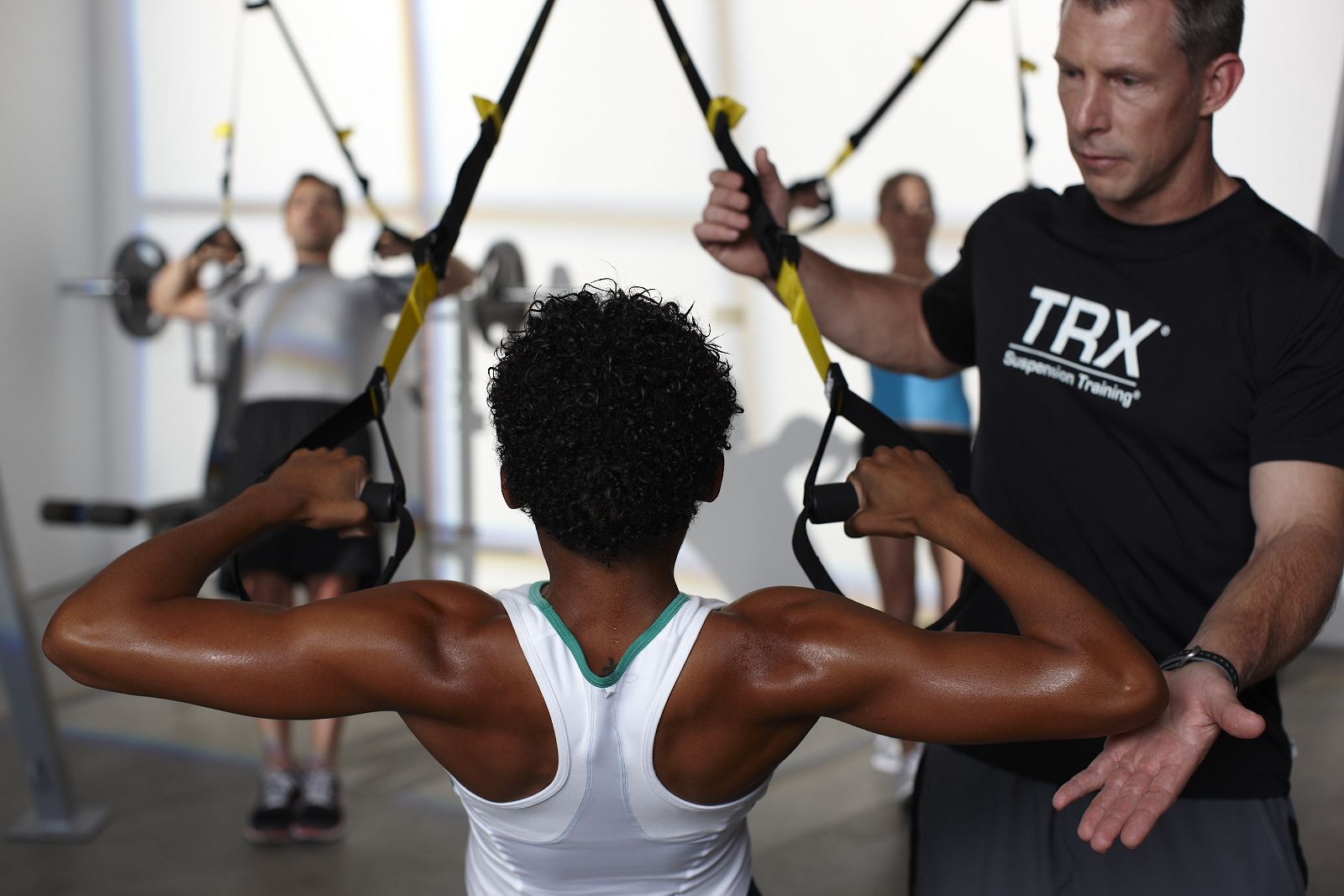
Challenge: Try This 15-Minute TRX Upper Body Workout
TRX Training
The TRX Suspension Trainer has devotees around the world because it’s an effective, adaptable tool for a full-body workout that anyone can use: whether you want to work less or more, all you have to do is adjust your angle. So what happens if you want to progress beyond steep angles and body weight? Does that mean you’ve outgrown your Suspension Trainer? Not at all! When you’re ready to take your training to the next level, simply increase your bodyweight by packing on the pounds… in an XD Kevlar weight vest.
A weight vest adds adjustable resistance to your Suspension Trainer upper body workouts. Need help finding your ideal training load? Take our quick assessment quiz. This 20-pound version lets you adjust weight in one-pound increments for the perfect challenge level.
TAKE OUR TRAINING QUIZ
Although you can wear a weight vest for any TRX exercise, we love using this tool to give the lats, rhomboids, and traps some extra love. If you’re new to exercising with a weight vest, or just want some ideas for a quick workout, we’ve programmed a 15-minute upper body drill featuring a bonus-weight TRX Low Row, High Row, and Pull-Up triple threat, followed by a Strength Band finale. For this drill, try an every-minute-on-the-minute, or EMOM, approach. You’ll get a brief break, about 30-60 seconds, after each three-minute period.
Strap on your weight vest, adjust your TRX straps to the midway point. Your goal is to complete 8-10 reps of your TRX Low Row in one minute. If you have a balance of time on the minute, you get it for recovery. Repeat this one-minute challenge two more times.
Next, you’ll attempt 8-10 reps of the TRX High Row in a three-minute EMOM format, followed by a TRX Pull-Up EMOM three-minute drill. (Don’t forget to over-shorten your TRX straps for those TRX-Pull-Ups!)
Finally, set your TRX straps aside and pick up your TRX Strength Band to finish the set. We’re adding in a hinged row—with an optional tricep kickback—for your final move.
With the sides of the band touching to form a long line, step on the center of the Strength Band and wrap your fingers around the two rounded ends; like you’re gripping a handle. Hinge at the waist, and engage your glutes and lower back. With your elbow close to your rib cage, pull up on the rounded “handle” ends of the strength bands until your wrists meet your rib cage. To add a tricep element to this move, straighten your elbows and extend the “handles” back for a tricep kickback. Use the same 8-10 rep EMOM configuration as you did for the first three exercises, and repeat for three minutes.
There you have it: in 15 minutes or less, your upper body will be on fire, and you’ll be on your way to your strongest year ever. Remember, there are hundreds of ways to use your Suspension Trainer, whether you’re chasing strength, flexibility, or mobility, and you can always add to a Suspension Trainer exercise by increasing your load with a weight vest. Anybody, anywhere, anytime, the Suspension Trainer can be your training partner for life.
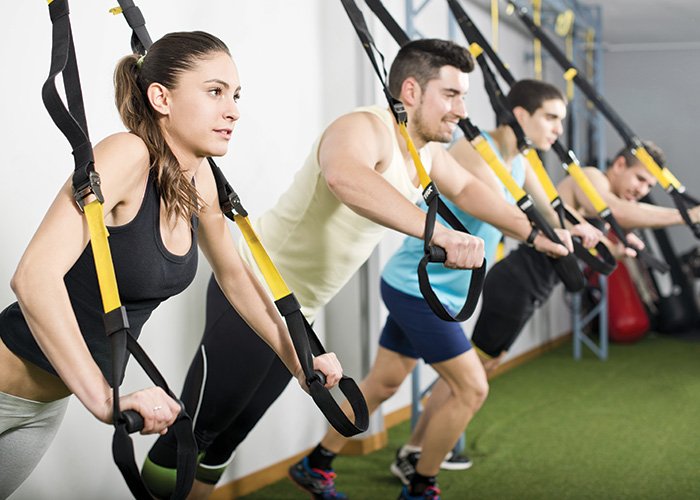
Celebrate Earth Day With an Outdoor Workout
Earth Day started in the United States in 1970 as an effort to rally support for environmental protection, and expanded to a global phenomenon in 1990. Today, 193 countries organize Earth Day activities each year on April 22.
Earth Day may be associated with advocacy and volunteering, but it’s also an opportunity to enjoy the beauty of nature. And what better way to do that than taking your workout outside? While outdoor exercise may not come with the calorie-burning monitor you see on machines at your gym, it’s loaded with perks for your mind and body.
Hiking
No matter where you live, chances are you have a hiking trail nearby. According to Health, hiking can burn up to 530 calories per hour, with an added 5 percent boost for hitting the trail in gusty conditions. WebMD notes that hiking lowers your risk of heart disease, improves your blood pressure and blood sugar levels, builds strength in your glutes, quadriceps, hamstrings, and core, and boosts your mood. Gregory A. Miller, PhD, president of the American Hiking Society, adds "Research shows that hiking has a positive impact on combating the symptoms of stress and anxiety. Being in nature is ingrained in our DNA, and we sometimes forget that."
Swimming
Many gyms have a lap pool, but you can also get a great workout swimming outside. If the water’s a little chilly, that’s all the better. According to Lifehacker, cold water swimming boosts your immune system, improves circulation, burns calories, and reduces stress. If you have joint issues, swimming is appealing because it’s a non-impact sport, and it torches hundreds of calories. (For example, 155-pound person swimming freestyle for one hour will burn 704 calories swimming fast, according to Active.com), Remember that swimming in open water presents a unique set of dangers. Do your research before diving in.
Cycling
Does the pain and sweat from your indoor cycling class translate to better performance outdoors? Hop on a bike and find out! According to Bicycling, cyclists can burn up to 600 calories an hour; the total varies according to your weight, speed, and time. Mountain biking yields even more impressive results, while building muscles in your arms, back, chest, and core. You get a great sweat and great views at the same time.
Surfing
If you’re lucky enough to live near waves, get out and enjoy them. Surfing hits all the major muscle groups: you work shoulders and upper body while paddling, legs while balancing and guiding the board, and core throughout, SurferToday.com explains. It’s a tough cardiovascular workout, but in between heart-pounding runs, you get to sit on your board and take in the beauty of the sea. Like open-water swimming, you need to be aware of the dangers, so study up before you paddle out.
Running
Running is one of the most budget-friendly forms of exercise because the only equipment you need is shoes. And the benefits extend beyond your wallet! Studies show that running can help prevent obesity, type 2 diabetes, heart disease, high blood pressure, stroke, and some cancers, while improving your emotional and mental well being, according to Runner’s World. Plus, it’s a form of exercise you can do practically anywhere.
Regardless of which outdoor activity you choose for Earth Day, complement your workout with a few minutes using your TRX® Suspension TrainerTM. You can use it for your pre- or post-exercise stretch, or for supplemental strength training. With a TRX xTender, it’s easy to use a vertical anchoring point—like a tree trunk—to set up your Suspension Trainer outdoors.
Want to share your take on Earth Day fitness? Upload your photos or videos to Facebook or Instagram, and tag #TRX and #MakeItPersonal.
Understanding Your Vector Resistance
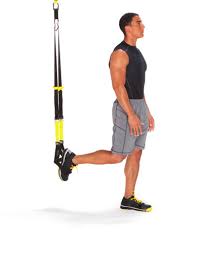
When using the TRX Suspension Trainer, there are three principles you can apply to modify exercise intensity: Pendulum Principle, Stability Principle and Vector Resistance Principle. Want to find the perfect TRX progression for your fitness level? Take our quick assessment quiz to get personalized exercise recommendations based on these key principles. Vector Resistance Principle applies to exercises that happen from a standing position. When standing straight up with your base of support directly beneath your center of gravity, your legs support 100% of your bodyweight. As your body angle steepens (as in the TRX Chest Press), your center of gravity moves outside your base of support and weight transitions onto the TRX, which adds resistance to the exercise. The steeper your body angle, the greater the resistance or intensity of the exercise.
TAKE OUR TRAINING QUIZ
The chart below explains the vector resistance for all TRX exercises that happen from a standing position. Use this to make your exercises easier or harder, depending on your goals.
Building TRX Combo Exercises
The ability to combine individual exercises together to create movements like the TRX Atomic Push-up is an incredible quality of the TRX. Using the "stacking effect," there is almost no limit to the creativity that can be applied to creating new, integrated exercise. We refer to them as Cool Combos. Watch this video and start thinking about how to combine individual exercises together using the "stacking effect."
Fraser Quelch is Director of Programming and Education for TRX. He is also a featured fitness author and a competitive ironman triathlete.

Body Transformation Plan - Male Edition
This is not a generic body transformation plan. This is a TRX-specific program designed to help men build lean muscle, burn fat, and improve functional strength using only a TRX suspension trainer. Whether you train at home, in a hotel room, or at the gym, this 10-week progressive plan uses your own body weight and gravity to drive real, measurable results.
As promised, this TRX-focused program is built from the expertise of Alwyn Cosgrove and Rachel Cosgrove, leading authorities in health and performance training. Created exclusively for the TRX community, this system is designed to accelerate fat loss, improve muscular definition, and enhance total-body strength through suspension-based training.
This TRX program is designed to be performed two to three days per week, progressively increasing in volume and intensity. All movements should be performed at a controlled, moderate tempo to maximize time under tension. Exercises labeled with the same number should be completed as a circuit (for example, 1A followed by 1B, and so on). Repeat each circuit before moving on to the next sequence.
To get the most out of your TRX transformation, your nutrition must support your training. Focus on eating lean protein and vegetables every three to four hours, and aim to drink at least half your body weight in ounces of water daily. Commit to consistency throughout the full duration of the program to maximize visible results.
Before starting, establish your baseline. Take three progress photos (front, side, and back). Men should wear shorts without a shirt for accuracy. Record a body fat measurement if possible, and choose a pair of pants that you can almost button. These markers will help track real progress beyond the scale, especially as your body composition improves through TRX training.
Your 10-Week TRX Body Transformation Program
Phase 1 — Foundation (Weeks 1-3):
Goal: Learn proper TRX form, build baseline core stability, and establish training consistency.
3 sessions per week. Each session is full-body.
TRX Squat: 3 sets x 12 reps
TRX Row: 3 sets x 10 reps
TRX Chest Press: 3 sets x 10 reps
TRX Lunge: 3 sets x 10 reps each leg
TRX Plank: 3 sets x 30 seconds
TRX Bicep Curl: 2 sets x 12 reps
Rest 60-90 seconds between sets.
Phase 2 — Build (Weeks 4-6):
Goal: Increase volume, add unilateral work, and begin progressing body angle for greater resistance.
4 sessions per week. Upper/lower split.
Upper Body Days:
TRX Row (steeper angle): 4 sets x 10 reps
TRX Chest Press (steeper angle): 4 sets x 10 reps
TRX Y Raise: 3 sets x 12 reps
TRX Tricep Extension: 3 sets x 12 reps
TRX Bicep Curl: 3 sets x 10 reps
Lower Body Days:
TRX Single-Leg Squat: 4 sets x 8 reps each leg
TRX Hamstring Curl: 3 sets x 12 reps
TRX Lunge: 3 sets x 10 reps each leg
TRX Hip Press: 3 sets x 15 reps
TRX Mountain Climber: 3 sets x 20 reps
Rest 60 seconds between sets.
Phase 3 — Peak (Weeks 7-10):
Goal: Maximum intensity through steep body angles, circuit training, and minimal rest periods.
4-5 sessions per week. Push/pull/legs or circuit format.
Circuit A (Push + Legs):
TRX Chest Press (feet elevated): 4 sets x 10 reps
TRX Atomic Push-Up: 3 sets x 8 reps
TRX Jump Squat: 3 sets x 12 reps
TRX Single-Leg Squat: 3 sets x 8 each leg
Circuit B (Pull + Core):
TRX Inverted Row (feet elevated): 4 sets x 10 reps
TRX Face Pull: 3 sets x 15 reps
TRX Pike: 3 sets x 10 reps
TRX Body Saw: 3 sets x 12 reps
Rest 45 seconds between exercises, 90 seconds between circuits. Repeat each circuit 3 times.
Nutrition for Your TRX Body Transformation
To build muscle and lose fat during this program, your nutrition matters as much as your training. Here are the key guidelines:
Protein: Aim for 0.7-1 gram of protein per pound of body weight each day. For a 180-pound man, that is 126-180 grams of protein daily. Prioritize lean meats, eggs, Greek yogurt, and protein shakes if needed.
Calories for fat loss: Eat at a moderate caloric deficit of 300-500 calories below your maintenance level. Use an online TDEE calculator to estimate your maintenance calories, then subtract 300-500.
Calories for muscle gain: Eat at a slight surplus of 200-300 calories above maintenance. You will gain muscle more efficiently but may also gain some fat.
Meal timing: Eat a protein-rich meal or shake within 1-2 hours of your TRX session. This does not need to be complicated — a protein shake and a banana works fine.
Hydration: Drink at least half your body weight in ounces of water per day. If you weigh 180 lbs, aim for 90 oz of water daily.
THE MALE PLANThe focus of this plan is high reps for more metabolic work, because most men never go above eight to 10 reps when it comes to their usual workouts. Want to find the right rep range for your fitness goals? Take our quick assessment quiz to get a personalized training plan. Performing 16 reps will be very challenging for most of your male clients. This plan finishes with an upper body circuit performed for eight reps to provide some extra hypertrophy for the arms and core.
TAKE OUR TRAINING QUIZ
#
Exercise
Reps
Rest
Sets
1A
TRX Lunge (w/ Touch and Hop)
16
30 secs
3
1B
TRX Inverted Row
16
30 secs
3
2A
TRX Balance Lunge to TRX Single Leg Squat
16
30 secs
3
2B
TRX Atomic Push-up
16
30 secs
3
3A
TRX Y Deltoid Fly
8
30 secs
2
3B
TRX Biceps Curl
8
30 secs
2
3C
TRX Triceps Extension
8
30 secs
2
3D
TRX Body Saw
8
30 secs
2
At the end of the three weeks, take "after" photos from the same angles as before. Also, grab those too-tight pants and try them on. Chances are, they'll now fit. Good luck to everyone who participates in this Body Transformation Plan, and be sure to encourage your clients to share their results below!
Thanks to TRX Master Trainer Rick Sewchuk for helping us out with the video!
A sought after expert for several of the country’s leading publications including a regular contributor to Men’s Health magazine, Alwyn Cosgrove has co-authored three books and currently spends his time consulting on fitness training, training clients, speaking on the fitness lecture circuit and coaching fitness trainers worldwide. Rachel Cosgrove is an author and a fitness professional who specializes in getting women of all ages into the best shape of their lives. She has her own column in Women’s Health Magazine and has also been featured in numerous health and fitness publications and also had TV appearances on Fox, ABC and WGN. For the past decade, Alwyn and Rachel have run Results Fitness in Santa Clarita, California, ranked one of the top 10 best gyms in America by Men's Health.
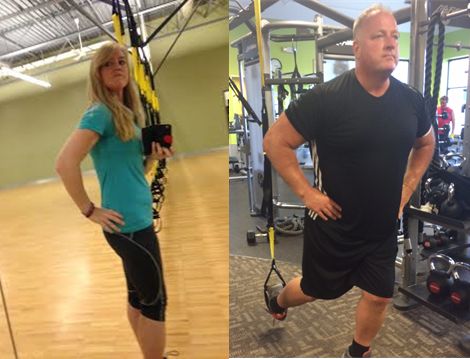
Body Transformation Blog Series - Part 1
How to Transform Your Body Using the TRX Suspension Trainer - Body Transformation Blog Series - Part 1
At TRX, we are obsessed with empowering our fans to "pursue their better." This is a blog series that will provide an in-depth exploration/explanation of how ANYONE can achieve a body transformation if they desire to. When making the decision to undergo a large-scale change to your body composition, you should always consult a medical professional for guidance before getting started.
The tips in this series are applicable to all kinds of body transformations whether that's helping those who want to lose weight, gain muscle, get lean or sculpt a specific section or their body. Not sure where to start on your transformation journey? Take our personalized fitness assessment quiz to get customized recommendations and a roadmap tailored to your specific goals. In blog #1, we'll provide an overview of the tenants of body transformation that will be discussed in detail as we move through the tips for transformation.
TAKE OUR TRAINING QUIZ
Stay tuned for more information. We encourage all who read this to share your tips with the TRX community and empower each other with positive encouragement across our social channels. Your pursuit of better inspires us all.
Introduction:
You’ve seen transformation success stories at every turn. People dropping 200 pounds or gaining 20 pounds of muscle, looking completely different from their previous physical appearance, or simply moving better and being able to enjoy life, and raving about the extra energy they have, how great they feel, the new mindset they’ve gained, etc.
Why can’t that be you? It CAN be you.
Whether you’re looking to drop weight, tone up or even bulk up, or to be able to enjoy your favorite activities again, all transformations start with a decision, a mental paradigm shift of taking ownership and embracing your vision as something that is attainable through a series of small victories that you can and WILL win. If you are looking for a change that transcends your life, the best time to consider what you want to change and how you are going to do it is always now. Remember, doing what you have been doing and expecting a different result won’t work. Here are the tenants of how to achieve the changes you are looking for in your endless pursuit of better.
#1 - The Principle of Individuality
It is critical you realize that except for identical twins, no two people have the same genetic characteristics and therefore will not respond to movement, diet and changes in their lifestyle at the same pace or with similar results. This is important because you must have realistic goals and give yourself credit for any change that is a result of your commitment to your goal of transformation. Give yourself some grace and always show yourself gratitude for what you are doing to make changes. Remember, success is often measured in millimeters, small victories that deserve to be celebrated and that generate positive momentum towards your larger goals. 2 more reps, 3% less body fat, 1 millimeter less on your waist, etc. Look for your small victories and don’t compare your wins to other people’s progress. You are on your own journey, embrace your positive results and keep your eyes on your next small victory instead of someone else’s.
#2 Nutrition and Diet
Realize that nutrition and diet play a HUGE role in a complete body transformation. We will explore important diet and nutritional considerations and techniques to be successful later.
#3 Mix Up Your Training
Maintaining variety in your training routine is a key to enhancing your performance. Staying committed to daily movement is essential for the body, mind and spirit, but selecting the right exercises at the right time is also critical for long term transformational success. As we explore the importance of understanding the five components of fitness, I’ll share some easy-to-implement exercise techniques using the TRX Suspension Trainer, which will offer you tremendous variety in your transformational program. We will explore periodization training, or progressive movement selection over time. This technique will allow you to progress at your own pace, with significant opportunity for success that will keep you engaged mentally and challenged physically. The TRX suspension trainer is a perfect tool for a total body transformation because it is portable, allowing you to take it anywhere, so no excuses. It is highly adaptable and extremely individual to any fitness goal, no matter who you are.
#4 Sleep, Rest, Recovery
The balance needed to experience training adaptations (progress) while avoiding excessive overload, inadequate recovery and even injury is tricky. The underlying causes are often a complex combination of emotional and physiological factors with training deficiencies creeping in that are highly individual, sometimes making it difficult to recognize. Most symptoms are identified only after they start, and physical function may already be suffering. Overtraining without ample time between workout rest and long-term recovery, coupled with inadequate sleep results in decreased performance capacity, burnout and injury. We will explore the signs and symptoms of overtraining, including several strategies to create your own sleep sanctuary to facilitate both short and long term recovery.
#5 The Importance of Routine
Routines help mold healthy habits and healthy habits are a catalyst for large-scale changes in how someone looks and feels when achieved. Creating realistic and consistent training, eating, hydration and sleeping routines are critical to achieving the fitness and health benefits you have or are working so hard for. The “use it or lose it” concept could not be more true, as detraining can occur in as little as 2-weeks of inactivity. Complete inactivity will decrease physiological function and performance quickly, as demonstrated in research with athletes who have been forced to halt training due to injury. For these reasons, a balance between training and recovery is necessary to avoid burnout and injury. Understanding the importance of progressive overload will enhance your ability to maintain a consistent routine that will keep you engaged and motivated to stick with while avoiding negative overtraining side effects. Several strategies exist to help build a healthy routine, and we will explore these training options in order to provide you with the essential tools to achieve the transformation you’re striving the achieve.
In future blog posts, I will isolate one element at a time and elaborate on strategies and tips on the given topic that will help create overload and promote change that is effective and progressive. Stay tuned and send us your comments and questions on Facebook!
Irene Lewis-McCormick M.S is Adjunct Faculty at Drake University, an SCW Fitness Education (SCW) Certification Master Trainer and the Education Director at Octane Fitness. An Orange Theory Fitness coach, she’s a twice published author (Human Kinetics) holding advisory board positions with Diabetic Living and the National Egg Council. Named Top 3 Group Fitness Instructor 2015 by IDEA Health & Fitness, Irene is a RYKA Ambassador and Subject Matter Expert for ACE. Irene presents education for SCW, ACSM, IDEA and NSCA. She is an SCW, TRX, Tabata Bootcamp, Barre Above, JumpSport and Octane Fitness master trainer. Certifications include SCW, ACSM, NSCA, ACE, AFAA & AEA.
Body Transformation Series, Part 1 of 7 Body Transformation Series, Part 2 of 7
Body Transformation Series, Part 3 of 7
Body Transformation Series, Part 4 of 7
Body Transformation Series, Part 5 of 7
Body Transformation Series, Part 6 of 7
Body Transformation Series, Part 7 of 7
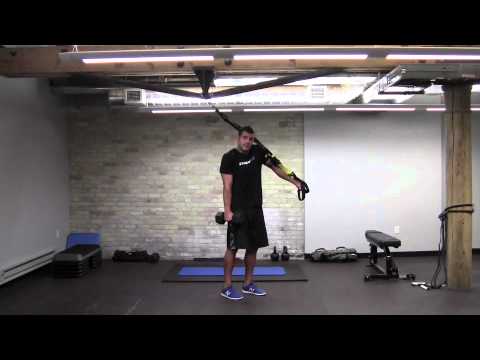
BJ Gaddour's TRX Push/Pull Core Workout
One of the great things about the TRX is that is fuses so seamlessly with other training tools to enhance classic fat-burning, muscle-building exercises. Want to find the perfect combination of TRX and dumbbell exercises for your fitness level? Take our quick assessment quiz to get a personalized training plan. Take the dumbbell, for example. Two classic movements are rows and presses to smoke your upper body. But if you combine the TRX with these two moves, you'll instantly make your abs work harder and get more muscles involved. Give this TRX Push/Pull Core Workout from fitness bootcamp and metabolic training expert BJ Gaddour a shot. Here he does a superset with the TRX Single Arm Plank and the Single Arm DB Row with the TRX Single Arm Row and the Single Arm DB Press. BJ suggests alternating between 30 seconds of work and 15 seconds of rest for each exercise.
TAKE OUR TRAINING QUIZ
BJ Gaddour, CSCS, is fitness bootcamp and metabolic training expert. He is the CEO of StreamFIT and a contributor to Men's Health.
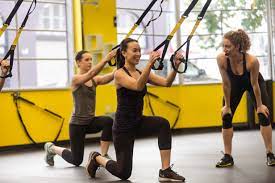
Best Practices for TRX Group Training, Ask the Professor
Trainees want workouts to be challenging, and with the TRX, it's easy to provide that challenge. Anyone can push trainees to go harder, faster and for longer. But “good” training should do much more than just provide an intense conditioning challenge. It should help trainees to build sound movement patterns before moving on to strength, power and metabolic components. So what's the best way to approach programming and teaching TRX training? This is one of the fundamental questions we at TRX honed in on while developing the TRX®TEAM™ group training concept. We considered every angle of what goes into developing effective TRX instructors capable of providing a fun, effective, time efficient challenge to trainees that's rooted in developing proper movement patterns.
Ultimately, we came up with FLAC, an acronym that encompasses what we've discovered to be the best practices for instructing all TRX trainees, whether they're young, elderly, beginners, experts, elite athletes, tactical operators or anywhere in between on the fitness spectrum. FLAC stands for: Focus, Learn, Apply, Challenge. In a nutshell, FLAC means teach a skill first before adding strength, tempo, power or stability challenges. Whether you're a TRX®TEAM™ trainer, a personal trainer working with individual clients or you train solo on the TRX, we recommend using the FLAC method to make the most of your training time. Here's a closer look at the concepts behind these four simple words and how you can use FLAC to help yourself and others train on the TRX.
F=FOCUSAt the beginning of the workout, the focus should be on learning movements in an appropriately unloaded position that allows the trainee to learn at an intensity level well below fatigue threshold. Trainees should be taught to move consciously in order to learn the movement patterns they need to successfully tackle the same movements at a higher metabolic intensity or with a greater stability or resistance challenge.
Instructors should use simple, comprehensible cues that help trainees to master the basic movement patterns they will use later, at a higher intensity. First the instructor describes and demonstrates the appropriate start, midpoint and end position for the movement. Then the trainees experience these points as isometric holds with the help of cueing from the instructor. Early on in the workout/program, the focus is on movement—what joints should be stable, which should be mobile, what muscles should be working, how the core and whole body should be engaged and involved in the movement.
L=LEARN“Learn” means enabling trainees to learn an effective progression. During this phase, trainees apply what they learned in the “focus” phase and set it in motion at a low tempo. This allows trainees to find the appropriate stability, vector and pendulum challenges for the movements they will use during the “apply” phase of the workout. If a trainee is unable to do a TRX Single Leg Squat with appropriate form, this is the time to demonstrate how to regress the movement so that it's something the trainee can successfully execute with good form. This is also the time to help the trainee dial in the appropriate level of resistance with movement away from or toward the anchor point. All the while, the instructor watches and cues to ensure trainees use appropriate movement patterns.
A=APPLYDuring this third phase, trainees apply what they've learned during the first two phases to the workout. Trainees now know what the movements should feel like, what joints should be moving, what parts of the body should be stable and what muscles should be firing or contracting, and they can put this knowledge into motion.
C=CHALLENGEDuring the final phase, the instructor increases the tempo, adds explosive movement to the foundational movements the trainees learned or increases the resistance or stability demands of the movements. This is the appropriate portion of the workout for turning up the heat and hitting trainees with a metabolic challenge.
The ultimate goal of the FLAC approach is to teach trainees proper fundamental movement patterns or skills (i.e. pushing, pulling, squatting, lunging) while also providing a conditioning challenge. We've found this to be the optimal approach for instructing trainees on the TRX.
Learn more about TRX®TEAM™ and the R4 solution.
As the resident TRX Professor, Chris Frankel draws from over 25 years of experience as a strength and conditioning coach. He earned an MS in Exercise Physiology from the University of New Mexico, where he is currently completing his doctorate in Exercise Science. Before taking the position of Director of Programming at TRX, Chris was an instructor in the Department of Health, Exercise and Sport Sciences at the University of New Mexico.
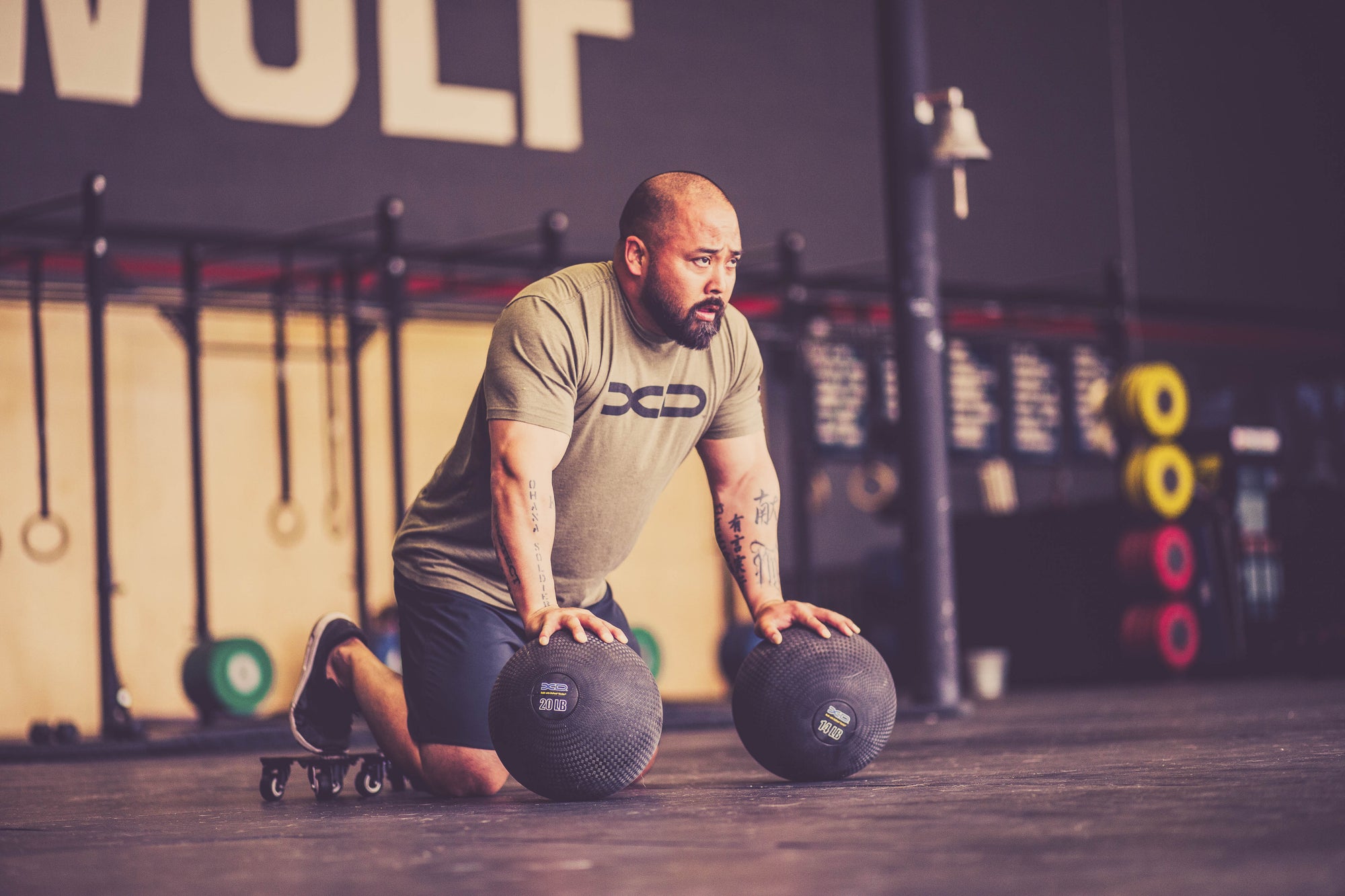
12 Medicine Ball Ab Workouts You Can Do Anywhere
Medicine balls have long been recognized as invaluable tools in fitness due to their versatility, effectiveness, and ability to target multiple muscle groups simultaneously.