
News
TRX for Yoga: Eka Pada Koundinyasana 2
The TRX Suspension Trainer provides an excellent tool to scale, complement and improve your yoga practice. We’ve partnered with yoga and fitness instructor, and Under Armour athlete Shauna Harrison to show you how to incorporate the straps into your yoga.
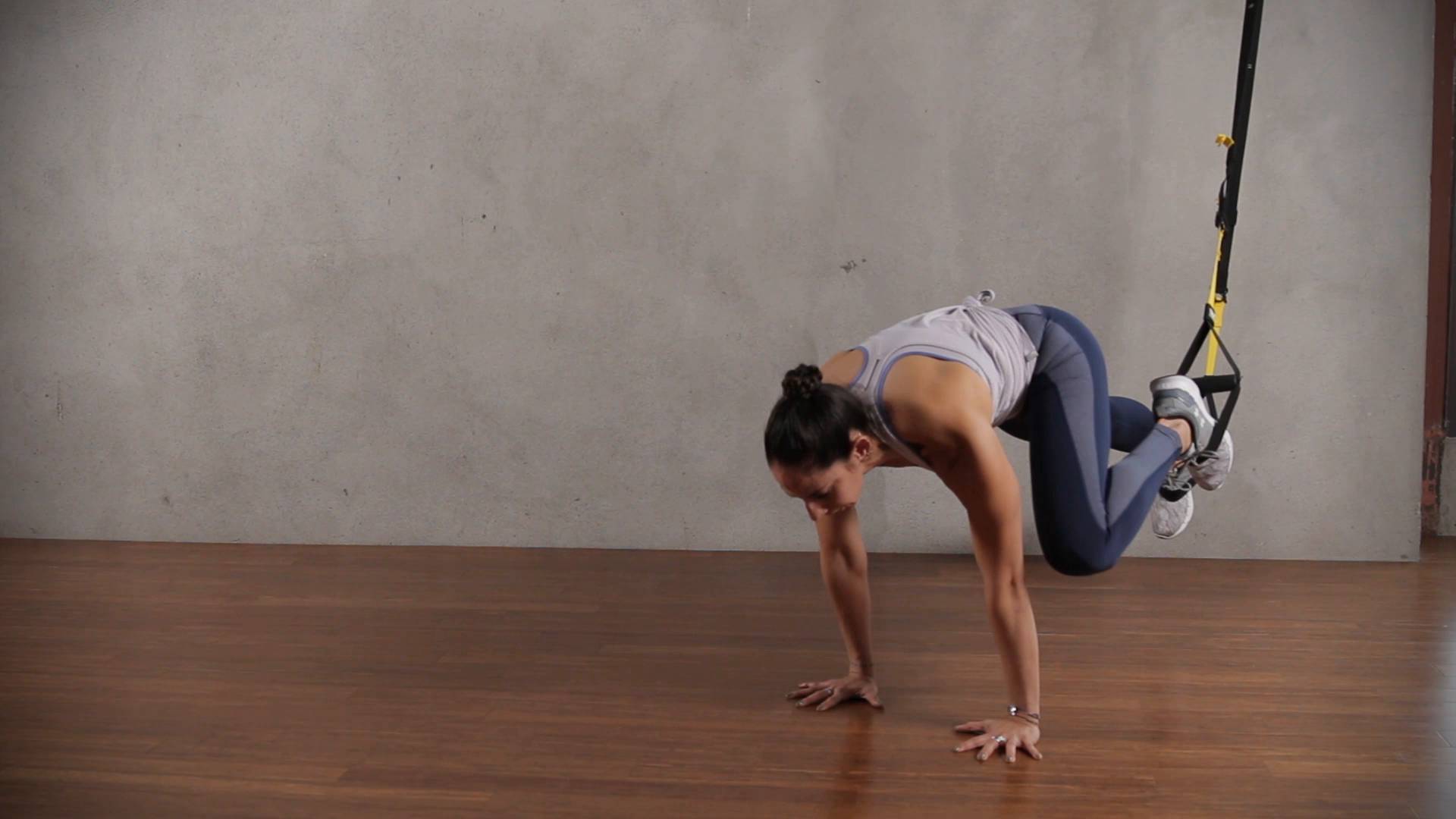
Eka Pada Koundinyasa (Pose Dedicated to the Sage Koundinya II) is a graceful yet challenging arm balance pose. The TRX Suspension Trainer helps you get into the pose and assists in helping you hold the pose before you are totally on your own. Even if you already know how to perform EPK2, the straps will help you to get deeper so you can get more out of this beautiful pose.
Progression 1
With the straps adjusted to mid-calf, position yourself on the ground facing away from the anchor point with the feet in the foot cradles. From the plank position, firmly press the hands down into the ground. Bring one knee towards the shoulder on the same side. Return to leg back to the starting plank position. Repeat on the other side. Perform this series a few times so that you can get comfortable and begin to build the upper body strength and balance. To exit this pose, return to the plank position, and release the knees to the ground and carefully remove the feet from the foot cradles.
Progression 2
Progression 2 of this pose is a slight modification of Progression 1. This time as you bring your knee toward your shoulder, add a push up. Repeat on the other side, and repeat the series.
Progression 3
In this progression, place one foot in both foot cradles with your hands in front of you in the plank position, and the free foot resting on the ground. Bring the free knee to the shoulder on that side, bending the elbows as you do. Set the knee on the back of the arm and hold. Continue to press the foot into the foot cradles. If your flexibility and the the strap length allows, you can extend through the foot of the bent leg to bring it closer to straight. To come out of this pose, return to plank position, drop your knees and carefully remove the foot cradles from the foot. To keep yourself balanced, repeat on the other side.
TRX for HandstandTRX for Yoga Warrior IITRX for Eka Pada Koundiyasana 2TRX for DancerTRX for Crow PoseTRX for BackbendsTRX for HeadstandsTRX for Warrior ThreeFor more ways to incorporate TRX into your yoga practice, try our TRX Yoga Fusion Workout.
TRX for Yoga: Crow Pose
The TRX Suspension Trainer provides an excellent way to scale, complement and improve your yoga practice. We’ve partnered with yoga and fitness instructor, and Under Armour athlete, Shauna Harrison to show you how to incorporate the straps into your yoga practice.
Arm balances like Crow can be difficult and intimidating at first, and the Suspension Trainer can really help you get comfortable balancing before you are totally on your own. Even if you already have an excellent Crow pose, this sequence will help you fine tune and further refine this beautiful position.
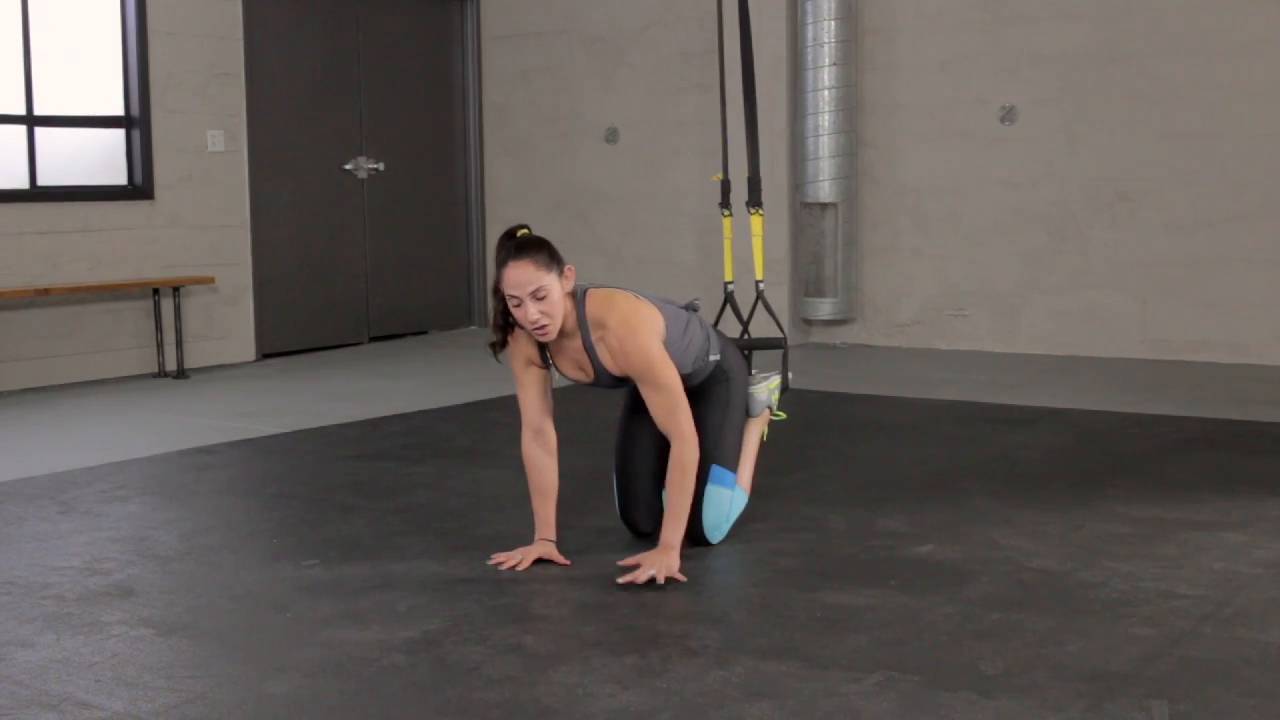
Progression One: This progression is basically Crow with your feet in the TRX foot cradles, directly under the anchorpoint. Use this modification to get into Crow correctly and safely, so you can develop your strength and balance.
Progression Two:With your feet still in the foot cradles, walk your hands away from the Suspension Trainer and practice drawing your knees to your triceps. This is an excellent way to work on using your core to control your balance.
Progression Three: With your feet still in the foot cradles, walk your hands away from the Suspension Trainer. Practice drawing your knees to your triceps one at a time, then pushing them back in a slow and controlled motion.
Try incorporating this sequence into your practice or just practice this sequence when you can’t make it to class, and be sure to check the rest of our TRX for Yoga series:
TRX for Handstand TRX for Yoga Warrior II TRX for Eka Pada Koundiyasana 2 TRX for Dancer TRX for Crow Pose TRX for Backbends TRX for Headstands TRX for Warrior Three For more ways to incorporate TRX into your yoga practice, try our TRX Yoga Fusion Workout.
TRX for Water Skiing
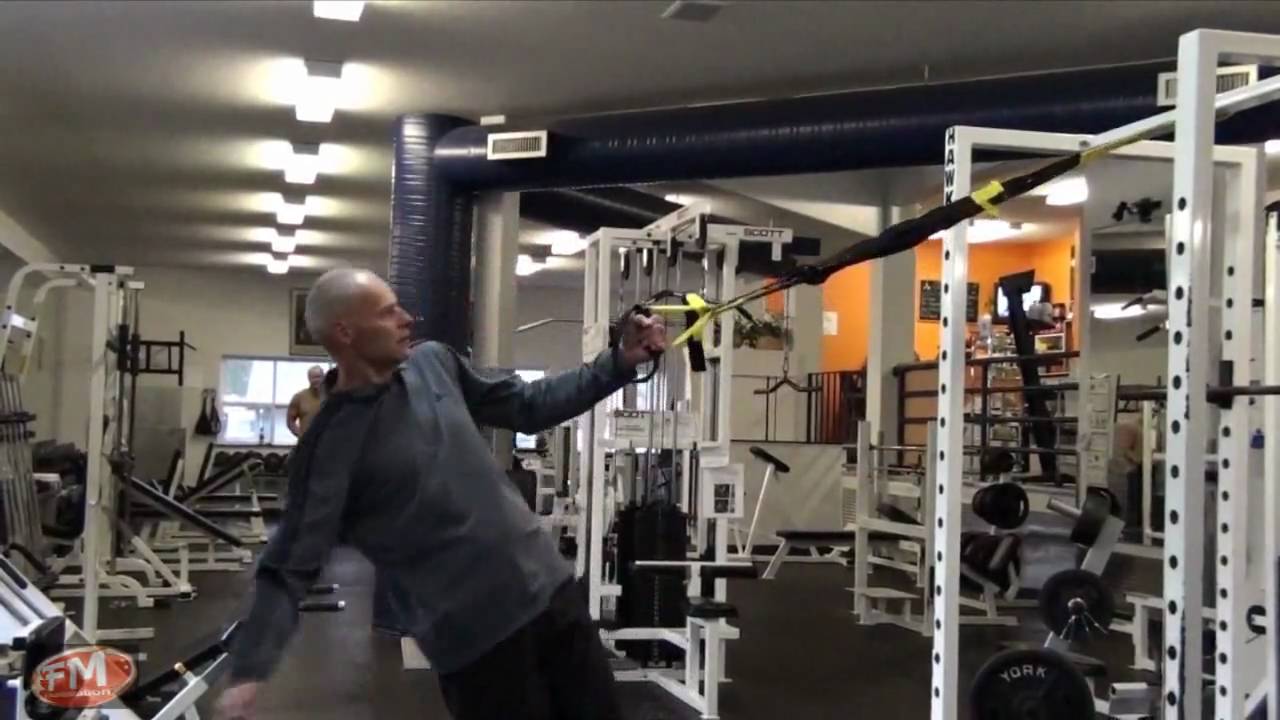
Check out this TRX sequence for water skiing, used by Pro Jason McClintock, perfect for warming up and activating the shoulders and back before a session on the water. If you’ve spent any time water skiing, you know your body can take a beating. Between the twisting and turning required to catch some air and the inevitable impact of a fall, the pros know they need to spend adequate time working on not just balance and strength but also flexibility so they stay limber and loose when gliding across the water.
Ontario native Jason McClintock has spent nearly his entire lifetime committed to the sport of water skiing. On skis since the tender age of two, Jason quickly rose to the top in the Canadian Jr. division, earning him positions on many Jr. and Under 21 Canadian teams. With multiple titles under his belt, he advanced to a spot on the Canadian National Team in 2004, skiing both slalom and trick, and helped the team take home the trophy at the World Championships in 2009. With this sort of tenure, Jason has had plenty of time to find out what works with his training.
"The best way to get warmed up before a ski set is by using the TRX Suspension Trainer," says Jason. "The dynamic movements you can do with the TRX are perfect for getting my whole body ready to compete." He also relies on it to help with another important aspect of fitness: cross training, which helps with injury prevention and allows him to push himself and his skiing to the next level. In the video, Jason shows us the exercises he likes to perform to break down tension and get his body warmed up.
The first exercise is a slightly modified version of the TRX Squat Row. “I like this exercise because it incorporates the upper and lower body,” says Jason, “and it hits the arms, back and legs in one simple movement.” (Click here to check out a Cool Combo featuring the TRX Squat Row.) Not sure which exercises best match your fitness level? Take our quick assessment quiz to get personalized workout recommendations tailored just for you.
TAKE OUR TRAINING QUIZ
The second exercise Jason calls "an awesome sequence that hits your back in multiple ways; it involves a bent over row, reverse flies and a transverse rotation." You'll recognize the TRX Golf Rotation in this combination, which helps increase hip and spine mobility and rotation. The last exercise, performed during the cool down at TRX classes here at TRX HQ, is great for really opening up your chest and hip flexors (perfect for those of us who sit for long periods of time).
Jason is currently competing in the 2011 Water Ski World Championships in Dubna, Russia. In between competition, no doubt he will be relying on his TRX to help keep him charging across the wake.
You can read more about Jason and his TRX Training by checking out this article in the August issue of Water Ski magazine.
TRX for the Love of the Run: Hip and Ankle Mobility for Runners
In this first installation of our For the Love of the Run series, professional runner and sub-four-minute-miler David Torrence and TRX Head of Human Performance, Chris Frankel, show you how to improve your posture as well as develop your ankle and hip mobility.
As a runner mastering your mechanics will make you faster, more efficient and will help to reduce your risk of injury. This program will help you break down your run into foundational movements to perfect your technique, improve your mobility, and add strength and power to your stride.
MOBILITY:
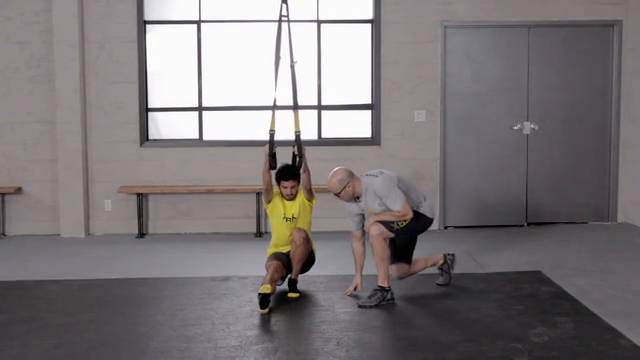
TRX Squat Row Sequence:Logic:This exercise will help develop integrated core strength, as well as hip, ankle and shoulder mobility. These are all critical components for your running foundation, especially as you begin to fatigue after a long or hard effort.
Set Up:Stand facing the Suspension Trainer with your feet facing forward, hip-width apart, holding the handles out in front of you. Brace your core and engage your glutes and hamstrings as though you are performing a plank while standing up.
Movement:Drop your hips down and back, while pushing your knees out, bringing your butt as close to your ankles as you can. When you get to the bottom, pull yourself forward with your hands while keeping your feet firmly planted on the ground.
Return:Let your weight rock back until you are back at the bottom of your squat position. Then drive your hips forward to return to your standing plank.
TRX Single-Ankle Mobility Drill: Logic:You flex and extend your ankle every time your foot hits the ground when you run. Improving your ankle mobility will enhance your stride from the ground up. This exercise isolates each ankle so that you can identify any imbalances between your left and right side.
Set Up:Stand facing the Suspension Trainer with your feet pressed together, holding the handles out in front of you. Brace your core and engage your glutes and hamstrings as though you are performing a plank while standing up.
Movement:Drop your hips down and back, while pushing your knees out, bringing your butt as close to your ankles as you can. When you get the the bottom, extend one leg out and pull yourself forward and back. You should feel as though you are pivoting back and forth on your ankle.Repeat on both sides.
Return:Bring your feet back together and drive your hips forward to return to your standing plank.
CORE STABILITY:
TRX Plank:Logic:Developing a strong plank will help you keep your chest upright and open to improve your breathing and arm drive.
Set Up:Start on the ground on your hands and knees with your feet in the foot cradles and your hands placed under shoulders.
Movement:Plank up into a pushup position keeping your hands directly under your shoulders. Brace your core and make sure your ears, shoulders, hips, knees and ankles are all in line.
Return:Lower your knees to the ground.
TRX Body Saw:Logic:Now that you can perform a plank, challenge your core stability and incorporate some integrated shoulder mobility to improve your arm-drive mechanics.
Set Up:Start on the ground on your hands and knees with your feet in the foot cradles and your hands placed under shoulders.
Movement:Plank up into a pushup position keeping your hands directly under your shoulders. Brace your core and make sure your ears, shoulders, hips, knees and ankles are all in line. Slowly rock forward and back just a few inches. Stop before you feel any strain on your lower back.
Return:Lower your knees to the ground.
Incorporate this sequence into your pre-workout routine, to mentally and physically prepare you to get the most out of your run.
Recommended Workout Sequence:Squat Row: 5-10 repsSingle Ankle Mobility: 5 reps on each leg, switch sidesPlank: 3-5 10-second repsBody Saw: 3-5 Reps
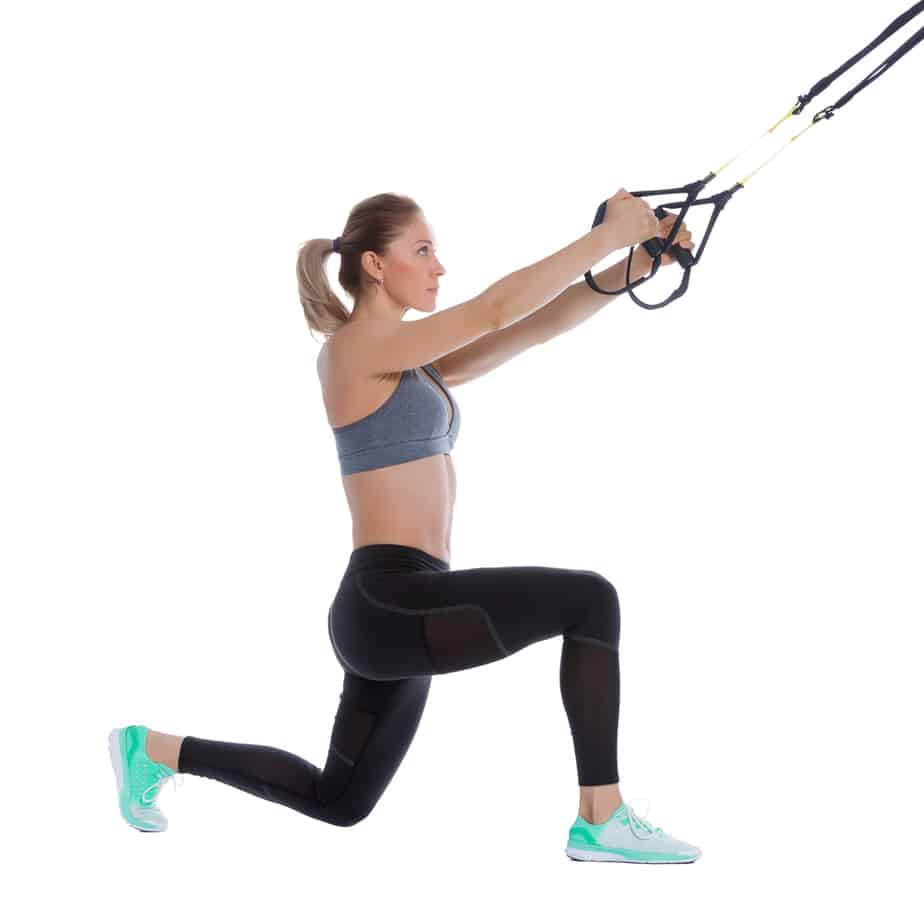
TRX for Spinal Fusion
More than 150,000 people undergo lumbar spinal fusions each year to help alleviate lower back pain. Want to find safe, effective exercises following spinal fusion? Take our quick assessment quiz to get a personalized training plan designed for post-surgery rehabilitation. If your or one of your clients is in the latter group, read on as Dr. Perkash addresses a question posed by a member of the TRX Community on whether the TRX Suspension Trainer could be used after undergoing spinal fusion surgery.
TAKE OUR TRAINING QUIZ
Question:
Can you address rehab using TRX related to spinal fusion? I am a trainer who is 11 weeks post op. I also have spinal disk degeneration. I use TRX regularly, and my surgeon agrees that TRX will be quite beneficial, as does my physical therapist. But I would like your opinion on whether using the TRX during my recovery would be a smart thing to do.
Answer:
Spinal fusion surgery involves “fusing” or connecting two or more bony spinal segments (vertebrae) using implanted hardware such as screws and rods, or with bone or synthetic bone products. Spinal fusion surgery can be performed in the lumbar spine for a variety of reasons, including elimination of pain from painful, abnormal motion (e.g., instability known as a spondylolisthesis), severe scoliosis, low back pain due to degenerative disc disease, as well as other entities such as fractures.
Many patients after lumbar spinal fusion surgery regain full function and have no specific restrictions six to 12 months after surgery. Others, however, continue to have limitations in their activities of daily living or recreational activities. For these reasons, it is impossible to accurately generalize about all patients with spinal fusion surgery. However, virtually all patients eventually benefit from an exercise program involving core stabilization exercises as well as cardiovascular exercises. It is important to discuss the timing and specific limitations of an individual’s rehabilitation program with the patient’s spine surgeon. Many individuals will eventually have no restrictions and can fully participate in all core stabilization exercises including using a TRX fully, while others may have limitations that the spine surgeon may impose either temporarily or permanently.
Many physical therapists, under the guidance of a spine surgeon or spine rehabilitation specialist, can teach patients specific exercises for the lumbar spine after surgery including applications with the TRX. I would encourage anyone who has had or is having spinal fusion surgery to consult with his/her spine surgeon for specific recommendations and limitations regarding his/her situation at any point in time. The most common path after surgery is a directed rehabilitation program under the guidance of a physical therapist during the first six to 12 months after surgery, followed by an independent home/gym exercise program indefinitely thereafter.
For those who have been cleared by their spine surgeon to participate in all activities without restrictions, the following TRX exercises may be appropriate to achieve the goal of core strengthening:
TRX Step Side Lunge
TRX Step Back Lunge
TRX Balance Lunge
TRX Crossing Balance Lunge
TRX Hamstring Curl
TRX Hamstring Runner
TRX Plank
TRX Side Plank (with or without Hip Drop)
TRX Crunch
TRX Oblique Crunch
TRX Squat
TRX Single Leg Squat
TRX Low Row
TRX Overhead Back Extension
TRX Standing or Kneeling Roll Out
TRX Hip Hinge (Wide Stance or Single Leg)
For more on how TRX Suspension Training bodyweight exercise is a safe, scalable and effective solution for you or your patients, visit our Sports Medicine page and download our White Paper. Also, be sure to check out our TRX Biomechanics: Healthy Back DVD, creating in partnership with Corrective Exercise Specialist Justin Price and featuring an easy-to-follow series of targeted stretches and strength training exercises to help you regain muscular balance in your back.
NOTE: Any medical information in this blog is of a general nature and not a substitute for the advice of a medical professional. If you need medical advice, see a doctor.
TRX for Tennis Elbow
In this installment of "Ask the TRX Doctor," Dr. Perkash fields a question from member Yanira M. on the cause of tennis elbow and if/when to start using the TRX again after this type of injury. Want to find safe exercises while recovering from tennis elbow? Take our quick assessment quiz to get a personalized training plan designed for your stage of recovery.
TAKE OUR TRAINING QUIZ
Question:
I've being suffering of chronic tennis elbow for the last three months, and it doesn't seem to be getting any better. I have a 0.5 cm tear in my extensor. Right now, I can't do any upper body exercise. I'm trying to figure out what caused this injury in the first place.
Answer:
“Tennis elbow” is a common musculoskeletal ailment that is known medically as “extensor tendinitis.” It usually represents cumulative trauma to the common wrist/forearm extensor tendon that originates along the lateral epicondyle (outside bone) of the elbow and inserts in various locations through muscles travelling across the wrist. It was named after a common ailment due to elbow pain as a result of incorrectly hitting a tennis backhand while bending the wrist. This resulted in chronic microtrauma to the extensor tendon and resulting lateral epicondylitis.
In general, more people are afflicted with tennis elbow through activities outside of tennis than through tennis itself. With the advent of the computer keyboard and mouse, many people suffer from lateral epicondylitis and other repetitive strain injuries (a.k.a. cumulative trauma injuries) as a result of excessive time in front of the computer. Repetitive use of the wrists and forearms through any activity or a combination of activities can result in lateral epidcondylitis. This can include assembly work using the hands, twisting instruments such as a screwdriver, using vibrating equipment such as a jackhammer or repetitive gripping activities of any kind.
Sometimes, the injury can be more significant and include more than simple tendinitis such as an extensor tear. Certainly the spectrum of injury in either situation requires physician consultation and guided treatment in an appropriate fashion. If someone does not have the strength and endurance to do a specific activity (e.g., using a keyboard or mouse for eight hours a day with relatively deconditioned forearm musculature) or if proper technique is not employed in given task (e.g., hitting a tennis backhand with a loose wrist or an excessively stiff racket), then injury is more likely to occur. All of these injuries should be treated appropriately under a physician’s guidance, and only after someone has been cleared by his physician should normal activities and sports activities be resumed. This includes using the TRX, as many of the exercises using the TRX require gripping using the forearm musculature. Sometimes, treatment of lateral epidondylitis can be prolonged, occasionally taking as long as one year or more to fully heal.
Common treatments for lateral epicondylitis include physical therapy modalities (heat, ice, ultrasound, etc), bracing, stretching and strengthening exercises, cortisone injections, acupuncture and, rarely, surgery.
Have a question for the TRX Doctor? Email askthedoc@trxtraining.com. For more on how TRX Suspension Training bodyweight exercise is a safe, scalable and effective solution for you or your patients, visit our Sports Medicine page and download our White Paper.
NOTE: Any medical information in this blog is of a general nature and not a substitute for the advice of a medical professional. If you need medical advice, see a doctor.
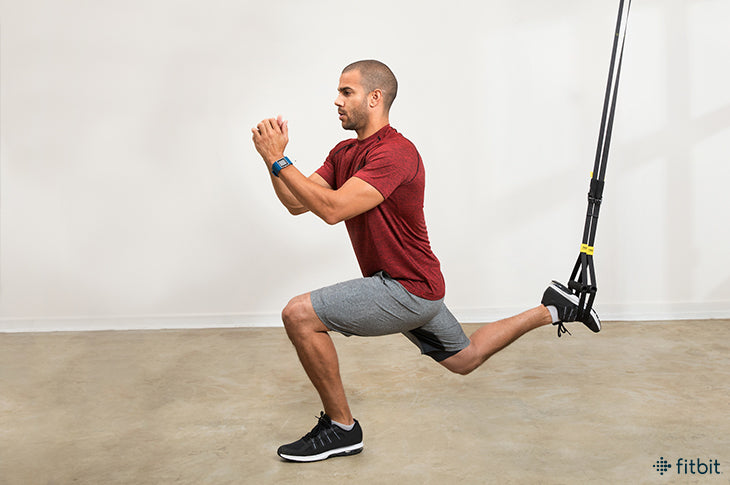
TRX for Strong Knees
"Your MRI looks worse than you do," my doctor said to me after a recent visit. After a torn ACL and cartilage damage I had suffered two decades ago, I was given a diagnosis of "early" (because I'm relatively young!) osteoarthritis. The effects of the degraded cartilage have begun to manifest. The doctor was essentially saying that my left knee MRI looks like it belongs to someone who is more limited physically. Looking to maintain strength and mobility while working around joint issues? Take our quick assessment quiz for a personalized workout plan that accounts for your specific needs. She was surprised by my level of sport play and by the muscle development I have in my legs. In fact, she surmised that the reason I've stayed so capable is my devotion to developing leg strength to support the knee.
TAKE OUR TRAINING QUIZ
What do you do when the knee breaks down? You can't stop squatting and lunging. If you do it in life, you need to train for it. Period. Over the years, I’ve worked with many people who have knee pain. After a trip to the doctor, they are often given glib, unhelpful advice like “don’t squat.”
Maybe stacking hundreds of pounds on a barbell and vertically loading the legs in a barbell squat isn’t the best approach with knee issues. But we still need strong legs and stable knees.
Enter the TRX. To strengthen the legs, there is no better exercise than a single leg squat. And with the TRX, it can truly be for everyone. Consider walking: you spend the majority of the time on a single leg! This means, with single leg training, you can provide a very “real world” leg exercise experience while at the same delivering a challenging load to the leg muscles with a resistance you are used to – your own bodyweight.
The depth and the speed of movement can be adjusted based on the appropriate skill and fitness level. And with the TRX, you get the right mix of balance help to allow better performance and stability if you need it. Single leg squat variations, such as the TRX Single Leg Squat and TRX Lunge are two terrific options for developing strong, capable leg muscles.
Another important part of healthy knees is stability. A major knee stabilizer is your hamstring muscles since they attach to the top of the lower leg bones. A hamstring that is strong while it is lengthening (eccentric contraction) is better able to keep the knee joint stable while performing a wide range of ground-based activities. I’ve created a great new TRX exercise to do just that.
With injured knees (or to prevent injury), it is best to perform a variety of movements at a variety of angles and avoid excessive loads and/or repetitive motions. The many options provided by the TRX for leg training allow for maximum impact with minimum stress. I’ve used some of the same exercises with obese clients after knee replacements and athletes seeking better performance.
Jonathan Ross, ACE Personal Trainer of the Year, Discovery Health Fitness Expert, TRX Master Trainer and creator of the TRX Super Hero workout, brings a fresh perspective on fitness to the industry (www.AionFitness.com). His personal experiences help him to create exercise strategies that deliver big results for clients.
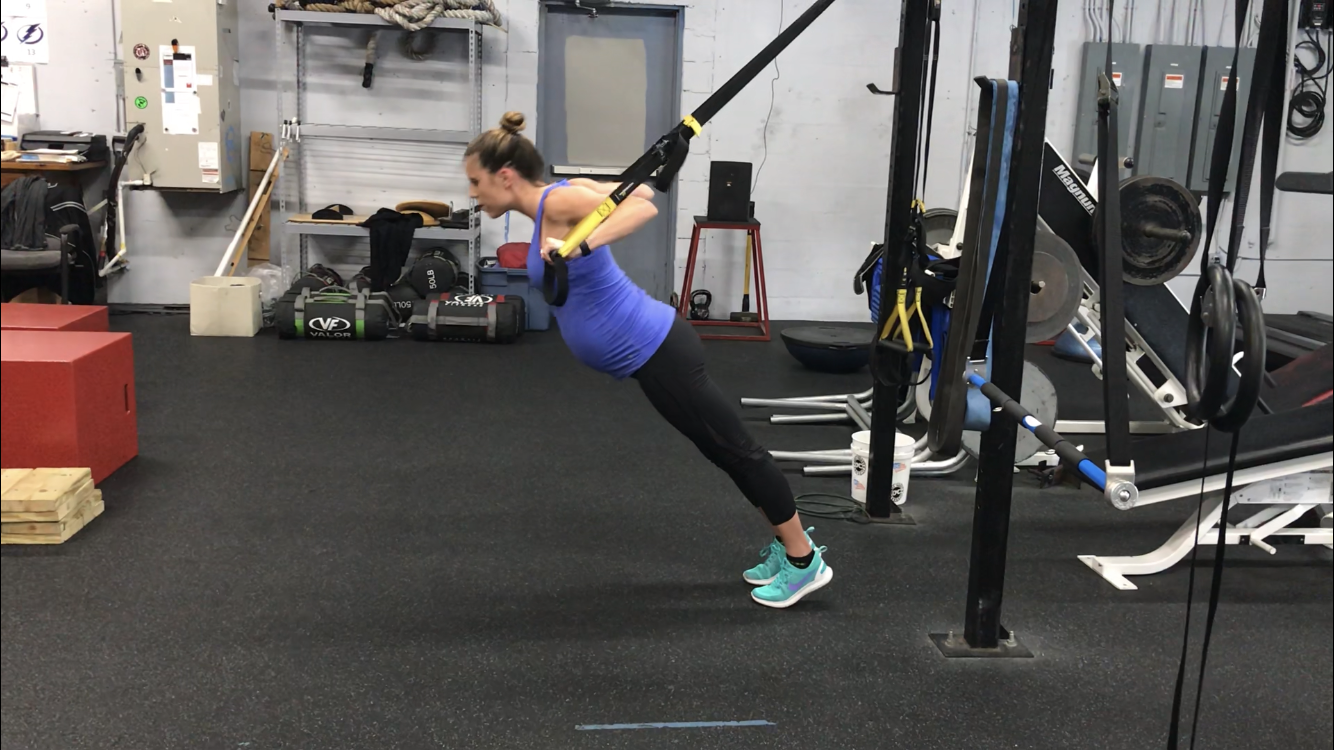
TRX for Prenatal Fitness
The list of exercise benefits during pregnancy is over a mile long, and most women are well aware they should include physical activity during the nine months of their child’s development. But let’s face it; pregnancy isn’t a cakewalk for most women. Nausea, sleepless nights, hip and back pain, round ligament pain, and weight gain are just a few of the many discomforts women may experience during their pregnancy, making a fitness plan less and less appealing.
While some women are able to continue to run marathons and participate in vigorous boot camp classes, others find it a struggle to simply stand up and walk across a room. With TRX suspension training, exercises can be regressed and progressed to adapt to ANY level, making it the perfect fitness tool for all stages of pregnancy. Want to find safe, effective exercises for your stage of pregnancy? Take our quick assessment quiz to get a personalized prenatal workout plan. The Suspension Trainer is also essential to help alleviate the aches and pains women may feel along their pregnancy journey.
TAKE OUR TRAINING QUIZ
TRX Low Back Stretch (wide stance)
Due to the forced anterior pelvic tilt caused by increased weight in the belly, the lower back and hamstrings often tighten up. This natural traction will help decrease discomfort and low back pain from carrying a baby.
With the Suspension Trainer at mid length, stand facing the anchor point and walk back so that your arms are straight out in front of you. With a shoulder-width or wider stance press your hips back and fold your body in half, leaning away from the anchor point.
TRX Chest Stretch
Many expectant mothers experience a shortening in the muscles of the chest
Adjust the straps to mid length and stand facing away from the anchor point. Walk forward so that your arms form a perfect “T”, and then step forward with one foot to create a stretch across your chest and shoulders. Ensure you do not walk to far forward to avoid low back pain or the shoulders rolling forward.
TRX Low Row
Along with the shortening of the chest muscles, the upper back muscles can weaken, leading to a “hunched” posture. TRX Low Rows are a great modifiable exercise to combat this.
Fully shorten your suspension trainer and stand facing the anchor point. Select an angle that is comfortable for you (the steeper the angle, the harder the exercise) and begin with your hands at your ribcage with your shoulder blades engaged behind your back. Slowly lower down, maintaining a perfect plank. Keeping your shoulders down and back, pull yourself back to the starting position.
TRX Assisted Squats and Lunges
Strengthening the glutes is important to help stabilize the hips and improve posture during pregnancy. Assisted lunges are also great for improving both balance and leg strength. As pregnancy progresses, a woman typically gains more weight and her joints become more lax, which can make lunges more difficult. Squats and Lunges can be unloaded using a suspension trainer.
TRX Resisted Heel Taps
Gently training the transverse abdominals can help prevent or alleviate diastasis recti, a thinning of the linea alba and a protrusion in the middle of the belly.
Begin lying on the ground facing the anchor point. Place both hands in the foot cradles and press down. Keep the core braced and knees bent at 90 degrees. Slowly lower one heel toward the ground until just before the low back rises up. Return to the starting position keeping pressure down in the hands. Aim for two 30-second sets of this exercise. (Note: Because this move is performed in the supine position, avoid doing this exercise any longer than 30 seconds and have the exerciser roll to her left side between sets.)
Prenatal Precautions
The American Congress of Obstetricians and Gynecologists (AGOC) published their first recommendations on exercise in 1985. Since then, these have been updated in 1994, and again in 2002. You can read the complete current ACOG Guidelines to learn how to identify absolute and relative contraindications to exercise during pregnancy.
Reasons to discontinue exercise and seek medical advice include:
• Vaginal bleeding
• Sudden swelling of the ankles, hands or face
• Dizziness or faintness
• Persistent, severe headaches and/or visual disturbances
• Chest pain, excessive fatigue or palpitations
• Unexplained abdominal pain
• Calf pain or swelling
• Persistent contractions that may be indicative of preterm labor
• Insufficient weight gain [less than 2.2 pounds (1 kg) per month during the last two trimesters]
• Amniotic fluid leakage
Source: American College of Sports Medicine. (2000). ACSM’s Guidelines for Exercise Testing and Prescription, 6th ed. Philadelphia: Lippincott, Williams & Wilkins.
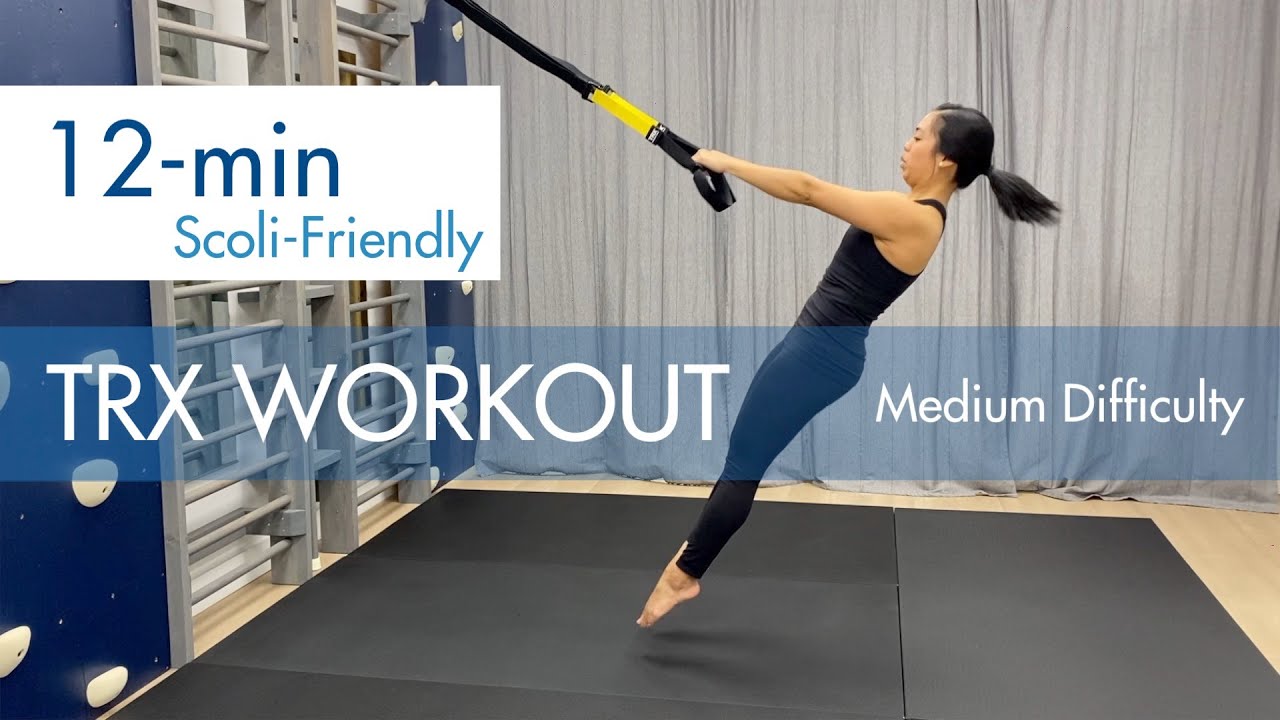
TRX for Scoliosis
In this installment of Ask the Doctor, Dr. Perkash addresses a condition that affects approximately seven million people in the United States: scoliosis. Want to find safe, effective exercises that take your spinal curvature into account? Take our quick assessment quiz to get a personalized training plan designed for those with scoliosis.
TAKE OUR TRAINING QUIZ
Question:
I am thinking about taking a TRX class and was wondering about using it if you have scoliosis. I'm an avid cyclist and take Pilates and yoga on a regular basis. Is there anything that might injure my back due to my condition?
Answer:
Scoliosis, or curvature of the spine, is generally divided into four categories: congenital, neuromuscular, idiopathic and degenerative. Congenital scoliosis means you are born with a curvature of the spine. Neuromuscular scoliosis generally results from diseases of the nerves or muscles, such as muscular dystrophy. The idiopathic scoliosis means that we do not know what causes it, but it usually appears during adolescence, and this is the most common cause. In the elderly, scoliosis can also result from asymmetric degeneration of the discs and spinal elements.
In the vast majority of cases, the curvature is mild and can be managed non-operatively. In rare cases, the curvature requires surgical intervention with placement of spinal hardware to “straighten out” the spine to prevent worsening of the condition. Bracing is also considered in cases of idiopathic adolescent scoliosis when the curvature worsens before full growth has been achieved.
In general, rehabilitation physicians recommend strengthening of the musculature surrounding the spinal curvature to strengthen and support the spine. This recommendation is for patients with or without scoliosis, but in those with scoliosis, this can be even more important to try to compensate for abnormal muscle imbalances that have resulted from the scoliosis.
The TRX Suspension Trainer is a fitness tool that can help with core musculature strengthening in virtually every exercise that is performed using it. Since the TRX uses the principle of balance in every exercise it employs, different parts of the core musculature surrounding the spine are activated to maintain this balance. It is an excellent tool for anyone who is interested in spinal musculature health and strengthening.
Unless there are specific features of scoliosis that may limit an individual’s ability to participate in exercises, most patients who do not require surgery do not have any specific limitations with regard to their exercise program. You should check with your spine physician if you have any specific limitations with which you need to be concerned.
If you are already actively involved in Pilates, yoga and bicycling and have not been given any specific restrictions by your physician, you are an ideal candidate to explore TRX Suspension Training to its fullest potential.
For more on how TRX Suspension Training bodyweight exercise is a safe, scalable and effective solution for you or your patients, visit our Sports Medicine page.
NOTE: Any medical information in this blog is of a general nature and not a substitute for the advice of a medical professional. If you need medical advice, see a doctor.