
News
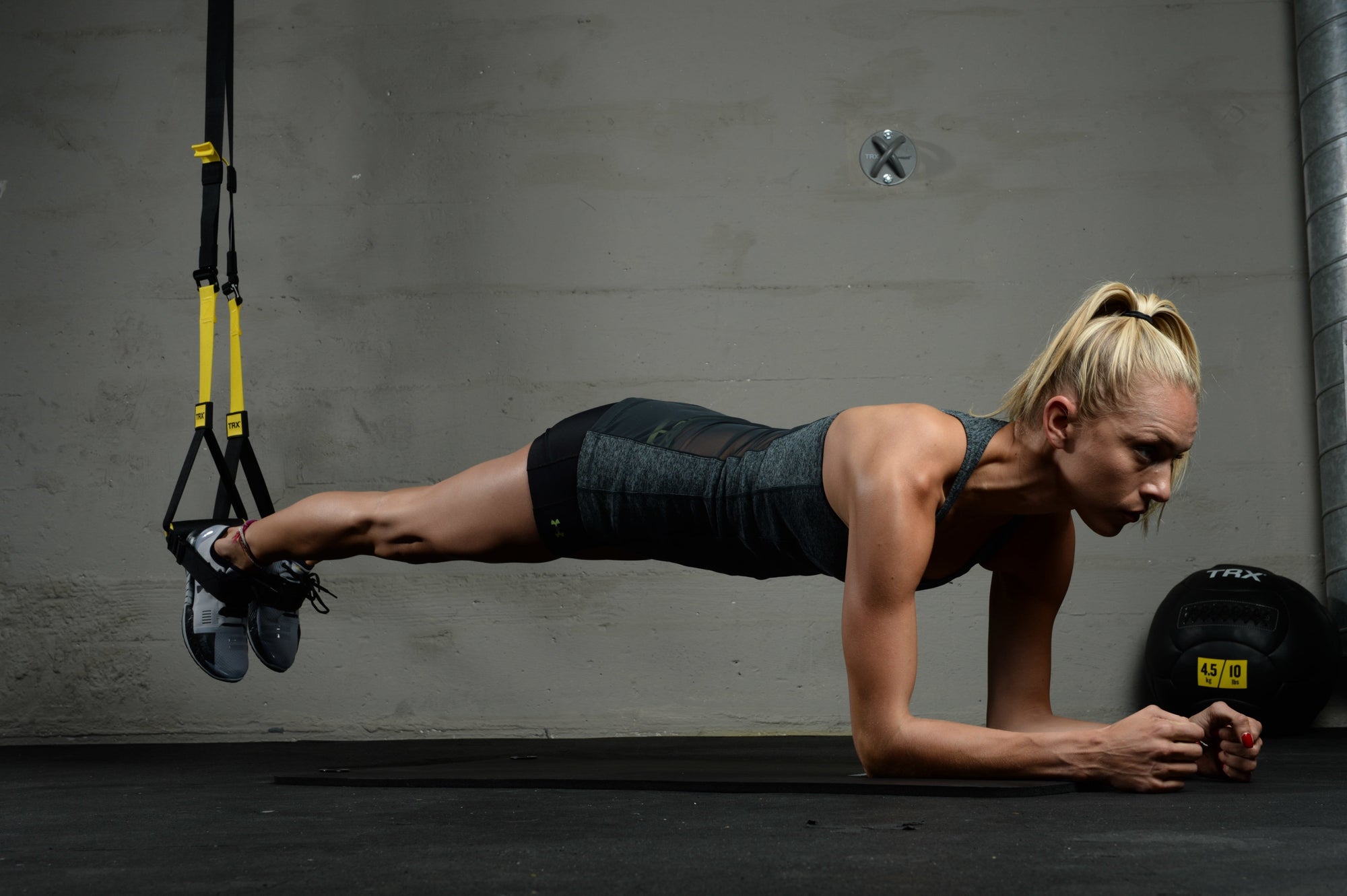
I Love to Hate You: 5 Foolproof TRX Ab Exercises
[Brought to you by Kari Woodall - TRX Master Instructor and former US National Team Swimmer.]
As a former professional swimmer, I may not wear a swimsuit daily anymore, but I still train like I do. Want to get your core swimsuit-ready? Take our quick assessment quiz to get a personalized ab-sculpting plan. So I maintain a healthy love-hate relationship with some stellar TRX core exercises to keep my abs swimsuit ready. Check out this unexpected array of 5 money moves that will crush your core and show off that svelte 6 pack in no time. The more you hate these core exercises, the more love they give. Say hello to your new besties…
TAKE OUR TRAINING QUIZ
TRX Standing Oblique Roll-out: You are my friend...for now.
I can make you easier by stepping away from the anchor and harder by stepping back, so I like you for that. Our friendship diminishes as I roll-out and try to stabilize my body on the straps, forcing me to engage my deep stabilizers and lighting up my core in 360 degrees. Don’t push your luck with me.
Cues: Stand Facing Away (SFA), Standing Plank position, toes point towards either 10:00 or 2:00, shoulders and head face 12:00. Maintain tight body position and roll out with control, keeping body aligned and shoulders away from ears. Press on handles and squeeze armpits to return.
TRX Pike Up: You’re a wolf in disguise.
Sure, you’re a hinging exercise for hip mobility and also challenge shoulder stability, but stop disguising yourself as down-dog, faker. Abs, abs, abs. Burn, burn, burn. And just when I think things can’t get harder, gravity reminds me of its existence as I try to slowly lower my hips back to plank. You’re not a dog. Reveal yourself.
Cues: Ground Facing Away (GFA), In Hands or Forearms Plank, pike the hips up and slowly return to plank maintaining neutral spine.
TRX Torso Rotation: Who said we were ever friends?
Targeting my hips, obliques, shoulders and back is cool, but the sneak attack of pain as I come out of rotation is not. Who needs eccentric control anyway? The more I decelerate, the more my torso chisels. Totally just unfriended you.
Cues: Single Handle Mode (SHM), find end range of motion (ROM) with front arm straight across chest, one shoulder and hip rotated towards anchor, spine stays neutral and hips and shoulders rotate simultaneously. Set shoulders and shoulder blades down, squeeze glutes and lats to slowly lower out of rotation (like a cylinder) back to facing anchor.
TRX Side Plank with Hip Drop: You’re banned from the TRX Club.
You are Pilates on steroids and you know it. Who needs frontal plane exercises anyway? My lateral chain is pretty strong, yet I weep the next day from armpit to hip. You’re dead to me.
Cues: Ground Sideways (GSW), In a Side Plank, lower and lift hips while stabilizing through bottom shoulder, keeping hips and shoulders vertically stacked and bottom shoulder away from ear.
Rip Stack: I despise you.
Dear angry yellow stick: My butt is on fire and my abs and obliques just joined the party. I sooooooo own you, isooooo-metric hold. I’ll use perfect posture to protect my spine and diaphragmatic breathing to increase core stability. I can resist rotation back to the anchor and hold that position for as long as you can, you evil little bar with leash. I love to hate you. You complete me, bae.
Cues: Stand Sideways (SSW), Hold Rip at base with left hand (near safety strap in Zone 1) and part way up in yellow or just above yellow with right hand (Zone 3 or 4 to make it easier). Place left hand on left hip and point Rip directly out in front of left hip, resisting the cord pulling torso and Rip towards anchor. Stand with good posture, aligning ears, shoulders, hips, knees and ankles vertically while keeping knees soft so muscles are active and knees aren’t locked.
About The Author | Kari Wodall
As a former US National Team Swimmer and Division I Collegiate Swimming Coach, Kari Woodall has trained and competed at the highest levels and coached others to do the same. She is a TRX Master Instructor, Certified Level II Firefighter, and fitness entrepreneur in Madison, WI. She incorporates her honed coaching techniques, class programming and leadership skills into her business model where she uses her in-depth experience to create unique and challenging custom programs and boot camps specifically geared towards first responders, swimmers, and triathletes.
To learn how to coach more workouts like this, check out TRX Education.
How to Warm It Up
Your grade school P.E. teacher told you: warm up to prevent injuries. He was right. But there's more to it than that. An effective pre-workout routine helps to prime the body by:
● Waking up and preparing the neuromuscular system● Increasing synovial fluid throughout the joints of the body● Introducing motor control patterns to facilitate the execution of progressively more complex exercises● Improving the compliance of soft tissue
Here, TRX Head of Human Performance Chris Frankel describes some pre-workout exercises you can do to prepare the body for movement. Want to find the perfect warm-up routine for your workout? Take our quick assessment quiz to get a personalized mobility plan.
TAKE OUR TRAINING QUIZ
Establish Stability
TRX programs are built on a foundation of core stability. The following technique will help you engage the deep muscles of your abdomen and the supporting muscles of your spine, creating bracing and stabilizing effects for your lumbar spine:
Stand with your feet hip-width apart, your weight distributed evenly between the toes and heels of each foot. Your arms should be relaxed and resting at your sides. Your ears, shoulders and hips should be aligned.
Take a deep breath. As you exhale, imagine you are going to do the following simultaneously: forward bend, back bend and side bend (both to the left and to the right). Engage all of the abdominal muscles that would enable these four motions, but keep your spine still. Be mindful to maintain the natural curve of your lumbar spine.
Repeat this exercise (deep breath, exhale, imagine movement) several times until you feel the stabilizing muscles of your core are “turned on” and ready to control larger, more complex movements.
Layer on MobilityBuilding from the ground up, begin to layer on mobility. Squats and forward lunges are both excellent exercises to incorporate into a pre-workout routine as they:
Mobilize the ankle, knee and hip joints
Invigorate the large muscles of the hamstrings, quads and glutes, thereby increasing blood flow throughout the body
Provide basic stability challenges, elevating the need for motor control
Complete a set of progressively deeper squats for 30 seconds followed by 60 seconds of lunges with alternating feet.
Add ComplexityIntroduce movements for the upper body that focus on shoulder and t-spine mobility.
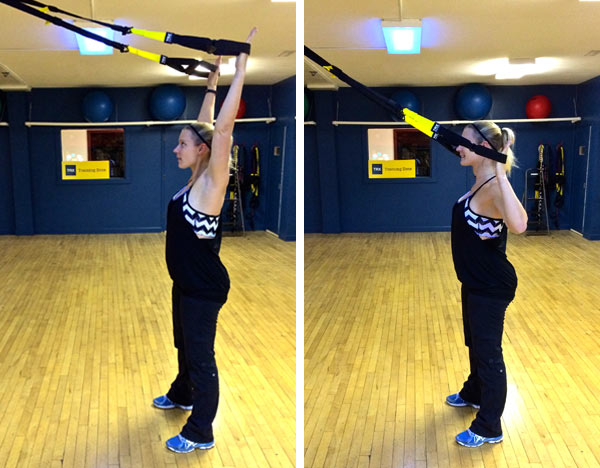
Stand with your feet hip-width apart again, a soft bend in your knees and your weight distributed evenly between the toes and heels of each foot. Raise your arms until they are parallel to the floor, with your palms facing down. Your arms should now be forming a T shape with your torso.
Externally rotate your shoulders so that your palms now face the sky. Reverse this action and try to get your palms to face behind you. Repeat 10 times.
Now perform a series of straight arm chest flys for about 20 seconds. Follow this with a series of shoulder presses. Keep your core engaged and your spine in neutral throughout.
Put It All Together
Combine the chest flys and shoulder presses with your squats. Complete two 30-second sets: squats with chest flyes followed by squats with shoulder presses.
Add the t-spine rotation to your lunges. Bend your elbows and raise your arms in preparation for a shoulder press. Now, step your right foot into a lunge. Keeping your hips level and your pelvis facing straight ahead, rotate your torso and turn your chest to the right.
Return to your starting position and repeat the complimentary movement with the left foot. Complete a set of 10 reps on each leg.
Warming up is too often neglected by athletes pressed to fit workouts into their busy schedules. This common mistake can reduce the effectiveness of the workout to follow (after all, better flexibility = better fitness), so be sure to implement an effective pre-workout routine with all of your clients and athletes.
You can perform the above movements with the TRX Suspension Trainer to add a higher level of pre-activation. If you’re looking for more TRX exercises to incorporate into your warm up, check out our TRX Essentials: Flexibility DVD or check our our Flexibility and Mobility training page.
As TRX Head of Human Performance, Chris Frankel draws from over 25 years of experience as a strength and conditioning coach. He earned an MS in Exercise Physiology from the University of New Mexico, where he is currently completing his doctorate in Exercise Science. Before taking the position of Director of Programming at Fitness Anywhere, Chris was an instructor in the Department of Health, Exercise and Sport Sciences at the University of New Mexico.
How TRX Develops Stability for Mobility
In this video, TRX Head of Human Performance Chris Frankel shows you how to get the most out of your TRX Training by stabilizing your core, abs and back in order to generate force and strength with your movements.
“Proximal stability for distal mobility” is a fancy way of staying, “keeping your core stable so that you can keep everything else mobile.” The result of this concept, when executed to perfection (as Frankel is doing in the video), is what we call a “moving plank.” His core, hips and ankles are all staying relatively stable, while he is creating movement (flexion and extension) with his shoulders and elbows. Stability for mobility, got it?
Ok, so how does this translate into greater athletic performance, superior force transfer or just a more focused and efficient workout?
Force is most effectively transmitted through the body when the core is locked in, engaged and stable. This solid foundation is then leveraged with your mobile extremities (shoulders, arms, legs and hips) to channel their movement across the body. Think of your core, chest and back as lever at the end of a car jack. The more stable and solid that bar is, the more force will be transferred from the end of the handle down to the jack. Think of where the lever bar meets the jack as a shoulder joint. The more fluid and mobile this joint is, the easier it will be to move that lever through a full range of motion. So if you put that all together, what you get is the more stable your lever bar (core stability) and the more mobile and flexible your joints (distal mobility), the easier it will be to lift up the car (efficient transmission of power).
This is one of the really unique properties of TRX Training. Not only does it build your core strength, it also trains you to then use that core strength to generate and transfer power throughout the body. This translates to better athletic performance and more functional workouts. Watch the video as Frankel takes you through a few interesting ways of utilizing stability and mobility in your workouts.
How to Over Shorten the TRX Suspension Trainer
Collecting TRX exercises has become a fast growing hobby. Want to expand your exercise repertoire? Take our quick assessment quiz to get personalized moves that match your fitness level. Spend some on YouTube and you will see people are trading exercises like trading cards (hmmmm... maybe collectible Fitdeck expansion packs?) Well, now here is something to add to your arsenal. In this video, Fraser Quelch demonstrates how to over shorten your TRX so you can go deeper and pull higher.
TAKE OUR TRAINING QUIZ
What exercises can you think of with an over shortened TRX?
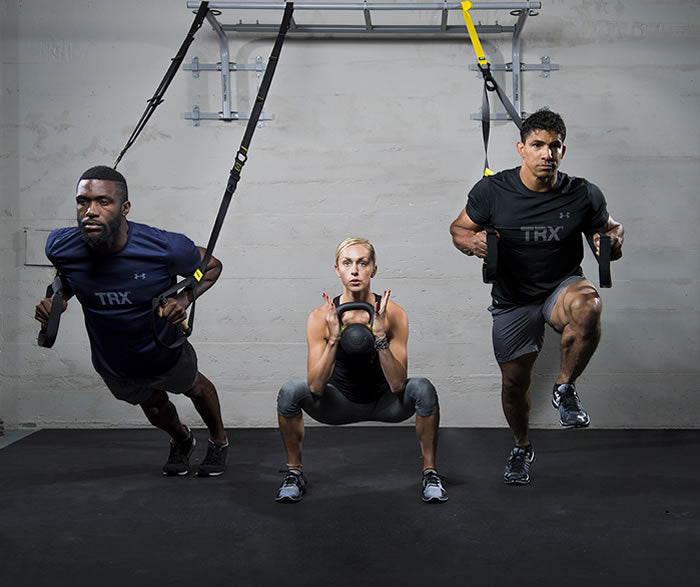
How to Go From Scrawny to Brawny
For most men, it’s the promise of bigger muscles. That, and maybe, girls. That’s why they workout feverishly. That’s why they frequent the all-you-can-eat buffets. That’s why they chug down chalky protein powders. And that’s why they subscribe to those goofy bodybuilding magazines. And still, for most scrawny guys, they stay scrawny.
If any of this resonates with you, you’re in luck. We have nutrition expert John Berardi here to share with us how you can pack on pounds the healthy way. And John should know. He himself was once a 5’8”, 130 pound, 17 year old. Think we’re kidding? Check out the before and after pictures below (nice jacket!), and read on for the top big mistakes little guys make when trying to gain weight.
Mistake #1 – Not Eating Enough
For most guys, this is, far and away, the biggest problem when the goal is healthy weight gain. If you’re not gaining weight, no matter how much you’re now eating, it’s not enough. To gain weight, you need to be at a caloric surplus. You can do this by: increasing your intake while keeping your expenditure the same; increasing both your expenditure and your intake, but still have your intake greater; or by reducing both, but still having your intake higher. Bottom line: you have to start eating more.
Now I know, you’re different. You eat A TON. And you still can’t gain any weight, right? Here’s what you need to do. Log into the free diet and weight loss journal – Fit Day. (If you have to, create a free account). While you’re there, analyze one day’s worth of your meals. Really, do it. It’ll only take 20 minutes.
Fit Day will tell you exactly how many calories you’re eating. And if you’re not eating at least your body weight (in pounds) multiplied by 20, you’re not eating even close to enough. But remember, if you’re already eating that much, what’s the next step? When in doubt, eat more!
Mistake #2 – Having Outdated Food Ideas
Do you believe that it’s inhumane to eat more than two to three meals per day? Do you think that breakfast is optional? Do you think workout drinks are only for serious athletes? Do you think eating too much protein will ruin your kidneys? If so, you’ve got some outdated food ideas, my friend.
To start with, three meals a day will never work for you. You need six meals a day. Also, breakfast is no longer optional. You need a “muscle breakfast,” and it needs to be your biggest meal of the day. In addition, workout drinks aren’t just for the big guys or the sport athletes. They’re for you. And you might even need multiple drinks each day. As far as the protein/kidney thing, well, if you’re a healthy guy, your kidneys are in no danger. So you’re gonna need a lot of protein. And eat your veggies. Eat 'em with each meal. Find a way to get them in, even if it means not getting a wide variety and only eating the ones you like. And also try to incorporate healthy fats like nuts, seeds, olive oil, flax seed oil, etc.
Mistake #3 – Thinking Muscles Happen Overnight
Over 80,000 reps, done over 10,000 sets, performed over 520 workouts, done over the course of two years. That’s what it took for me to transform my body from 135 to 205 pounds. Sure, in retrospect, two years didn’t seem all that long. However, during my transformation process, it felt like forever.
Think about it, in two years, there are 104 weeks. So, although I gained about 70 pounds of mostly lean body weight during that time, it really averages out to just about 0.7 pounds per week. Guys, that feels slow. Like no major change is ever gonna happen. But, just like with banking, small, consistent deposits collected over long periods of time can lead to a big bank account. If you want to build serious muscle, check out the TRX Kettlebell: Iron Circuit Conditioning DVD.
Of course, the key word there is consistent. I’ve said it before, and I’ll say it again. Consistency, not novelty, is the secret to uncommon results. If you can figure out how to train and eat right for your body, and you practice doing those two things every day for 720 days straight, you too will go from scrawny to brawny. I promise.
Ok, there you have it. My top skinny-guy mistakes. If you’re looking to build muscle and struggling along the way, make sure you ruthlessly eliminate these three things. Because doing so will likely mean the difference between sporting a super-hero physique, or staying exactly like you are now.
Dr. John Berardi is recognized as one of the top exercise nutrition experts in the world. His work has been published in numerous textbooks, peer-reviewed journals and in countless popular exercise and nutrition books and magazines. Through his company, Precision Nutrition, Dr. Berardi has worked with over 50,000 clients in over 100 countries. These clients span the spectrum from recreational exercisers all the way up to the athletic elite, including: The Cleveland Browns, The Toronto Maple Leafs, The Texas Longhorns, Canada’s Olympic Ski Teams, Canada’s Olympic Bobsleigh and Skeleton Racers, World Champion UFC Fighters, Canada’s Olympic Speed Skaters and more.
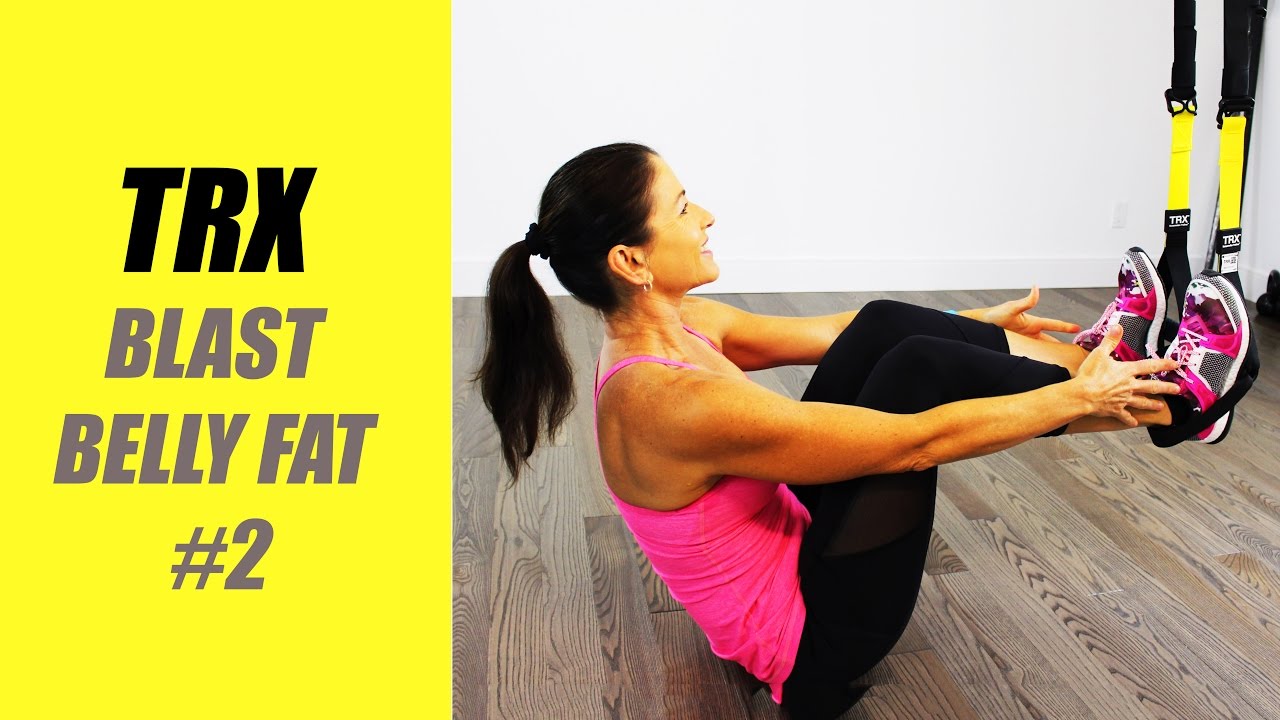
TRX
How To Lose Belly Fat With TRX
If you are looking for a quick trick to shed some excess belly fat, TRX could be a good place to start. Unlike almost any other training system available, TRX Suspension Training challenges your entire body in all planes of motion creating a huge metabolic effect and helps you build lean, toned muscle.
First off, you should know that you are not alone in your quest to trim down. Every month there are 110,000 Google searches for "how to lose body fat," on average 51% of American adults report that they want to lose weight. Not sure where to begin? Take our quick fitness assessment quiz to get a personalized workout plan that factors in your current fitness level and weight loss goals. Though challenging, you can make a lot of headway toward trimming down your waistline with these simple tips and a structured approach tailored to your needs.
TAKE OUR TRAINING QUIZ
1) Stop eating foods labeled “Low Fat” or “Low Calorie”Though it sounds like a good idea, the oh-so-popular “low-fat diet” has had some big negative consequences for the American metabolism. When fat and calories became the enemy, the food industry rushed to provide more low-fat and low-calorie options. The problem was that when they removed the fat, the food tasted terrible, so the industry loaded these new “healthy” options with loads of sugar, salt and artificial sweetener to compensate.The result was that we started ingesting copious amounts of sugar in place of fat. And while sugar, by volume, has fewer calories than fat, your body process sugar and fat in dramatically different ways. When you have excess sugar in your system your body turns it into fat - and typically this is the kind of fat that accumulates in the belly, hips and butt.Instead, try eating less-processed, whole foods without added sugars, salts and chemicals. Your body will process these calories in a totally different and more efficient way, and you will find yourself more satiated, with more consistent energy levels.
The TakeawayThe fewer things done to your food between its source and your mouth, the better - most of your food should be close to its natural state, colorful and unprocessed.2) Stop focusing on “problem areas”Sorry, there are no amount of crunches you can do to lose your belly fat. In fact, crunches are probably one of the least effective exercises you can do to slim your waistline. If you want to make a big impact on your “problem areas,” think about the bigger picture. Focus on total-body exercises and workouts that challenge your entire body. This will burn more calories and improve your functional fitness - the fitness that you use in everyday activities.This kind of holistic approach to your workouts will make you feel better and move better no matter what you’re doing, making it easier to live a more active lifestyle, and in time helping you improve your problem spots. The TRX Suspension Trainer delivers an incredible total-body challenge with every exercise, providing a huge metabolic effect that will help you move and feel better than ever.
The TakeawayUsing more muscles means burning more calories. Incorporate total-body exercises in your workouts to get the biggest bang for your training buck.3) Progress over perfectionWe’ve all been there; you missed your small window to make it to the gym or your favorite group class is too full, so you decide to take a day off. The next day your boss schedules a meeting over your lunch hour so you miss the run you had planned for that day. This pattern adds up, then the weekend comes and you try to make up for a week off with a marathon session at the gym, totally exhausting yourself and killing your workout motivation for days.Remember this: One meal or one food does not make you fat or out of shape - just like one workout does not lean you out out or make you a champion. Over time, all the small things you do consistently make a big difference. Making the healthy choice for meals and pushing away from the table before you’ve overdone it, are simple things you can do every time you eat. The same thing goes for your exercises plan, small doses performed consistently can significantly contribute to your strength, mobility and fat loss goals.
So if you only have 15 minutes, do a 15 minute workout, even though you had more scheduled for that day. There is a lot you can do with just your bodyweight and a little space to move you toward your goal. A really effective tool to have for these situations is a TRX Suspension Trainer, they set up in a matter of seconds to any sturdy door, overhead bar, fence or vertical pole, allowing you to get exactly the kind of workout you need in the time and space you have. If you don’t know what kind of workout you want to do, try the free TRX App with four free total-body workouts you can do anywhere.
The TakeawaySmall doses performed consistently can significantly contribute to your strength, mobility and fat loss goals. Don’t stress the small stuff, and keep your eyes on the prize. For more information, take a look at our weight loss calculator
Don't have any TRX Training gear yet? Here are some options to get you started:
TRX® PRO4 SYSTEM
BUY NOW
TRX® RIP TRAINER
BUY NOW
TRX® BANDIT
BUY NOW

How to Get Started With Your TRX Suspension Trainer™
The best type of workout gear is the type you use. We think the TRX Suspension Trainer™ is pretty fantastic, and we want you to feel the same way, so we’ve put together a quick tutorial—and a free workout video with TRX Training Club® Coach Niko Algieri—to help you get comfortable with your TRX Straps.
The Set-Up
There are two critical pieces for every TRX workout: The TRX Suspension Trainer and an anchor. If you’re brand new to Suspension Training®, you’re probably starting with either the Door Anchor or the Suspension Anchor. (Both come with every Suspension Trainer, but if you happen to lose either, we sell replacements.) To maximize your workout, try to find a space at least eight feet long by six feet wide.
The Door Anchor is a black strap with a loop on one end and a padded square on the other end. You can toss the Door Anchor over any hinged door, and then close the door to secure the anchor. (Ideally, you want to use a door that opens away from you.) Once you shut the door, clip the Suspension Trainer carabiner through the loop, and you’re ready to begin.
The Suspension Anchor is the long, yellow or black strap with a carabiner at one end and loop at the opposite end. You can wrap it around a basketball pole, a tree trunk, an exposed beam or a play structure, like a swing set.
To set up your Suspension Trainer with the Suspension Anchor, first clip the carabiner on the main body of the Suspension Trainer to the bottom anchor loop of the Suspension Anchor just below the TRX badge. Do not clip it in any other loop of the Suspension Anchor.
Attach the Suspension Anchor to the anchor point by wrapping it as many times as necessary to ensure the bottom of the Suspension Anchor hangs at about six feet from the ground. This is the ideal height to perform all TRX exercises. If your anchor point is either taller or wider than expected, use a TRX Xtender to accommodate those adjustments and ensure your TRX is still at optimal height.
Clip the carabiner in the Suspension Anchor into one of its intermediate loops, or around the Suspension Anchor itself, and pull it tight to make sure it’s secure. A tip for attaching the TRX to a smooth bar or pole is to wrap the Suspension Anchor several times around it to prevent it from sliding side to side. Always remember to weight-test your TRX before using it by pulling hard on it.
Adjusting Your Straps
In the middle of each strap on your Suspension Trainer, there’s a square-shaped Barrel Lock Adjuster, and—just above it—a tab. (On the Home2 and Pro4 systems, the tab is yellow. On the Tactical and Digi Camo systems, it’s black.) In its “locked” mode, the Barrel Lock Adjuster faces up and down.
To shorten the length of your straps, tilt the Barrel Lock Adjuster toward you, so that it’s parallel with the ground. Keeping it parallel with the ground, use your free hand to pull up on the tab of the strap you’re shortening. When you let go of the Barrel Lock Adjuster, it re-locks its position. Repeat on the second side before beginning your workout.
To lengthen the straps, flip the Barrel Lock Adjuster toward you and pull down while holding it open. Some people find it easier to extend both sides at the same time.
Whether you’re shortening or lengthening the straps, it should be easy to adjust the length when the Barrel Lock Adjuster is fully open.
The Workout
Now that you’ve got your Suspension Trainer set up, it’s time for the fun part: working out. Above, Coach Niko Algieri is introducing seven signature exercises: TRX Low Row, TRX Mid Row, TRX High Row, TRX Chest Press, TRX Y-Fly, TRX Bicep Curl, and TRX Tricep Press.
Finding the Sweet Spot
People at every fitness level turn to Suspension Training because it’s scaleable. Depending on your stance and your angle to the anchor point—remember, that’s the spot where you connected your carabiner to the loop—you can make an exercise easier or harder.
Here’s a quick tip as you get started.
When you’re standing, walking closer to the anchor point makes an exercise easier, stepping away from the anchor makes it harder. You can also think of it this way: the steeper the angle, the greater the challenge.
Learn With the Best
Working with a trainer is one of the smartest ways to level up your fitness routine, but it doesn’t have to cost a fortune: You can access the full TRX Training Club lineup of Live and On-Demand classes for only $19.99 per month. New members get a free trial, so sign up, hop into class, and soak up the expertise of dozens of world-class trainers and hundreds of class options as you begin your TRX journey.
Try one of our TRX products today:
TRX® PRO4 SYSTEM
BUY NOW
TRX® HOME2 SYSTEM
BUY NOW
TRX® TACTICAL GYM
BUY NOW
How to Fit a Home Gym in a Studio Apartment
Tune into daytime television, and you’ll see commercials for complete home gyms—especially during resolution and “beach body” seasons. (Bowflex, anyone?) If you have a large home with with space for full-body weight training equipment, those big machines might be the right choice for you. But there’s a misconception that only people with a sprawling house have room to exercise. In reality, you can get a full-body workout in a studio apartment or a dorm room if you choose the right modalities and equipment.
The amount of space you need depends on your height. The width of the area should be at least equal to your wingspan, (a measurement of fingertip to fingertip, with your arms in full lateral extension; this is usually the same as the height), and the length should be large enough for your to lie down flat with your hands and toes fully extended in opposite directions. Height requirements can vary: ideally, you want enough space for an explosive jump since jumping is an easy way to increase your heart rate. Keep in mind, however, that the average ceiling height is only 8’ tall. If you’re over 6’ tall, you may have to avoid those big jumps indoors. For example, if you’re 6’ tall, your workout would be approximately 6’ x 7’.
To be fair, 42 sq. ft. is a significant chunk of real estate in small home, but it doesn’t have to be permanently dedicated to fitness. You could simply push a coffee table or sofa to the side to clear the area for your workouts. Once you’ve settled on a space, the next step is choosing types of exercise.
The most fuss-free exercises are driven solely by your bodyweight. Think squats, jumping jacks, planks, push-ups, skaters, and burpees. When you want to add variety to your routine, there are lots of small tools that you can add into the equation, like bands and gliders, that will occupy relatively little space in a small home. (Most of those tools will fit into a file box of milk crate for easy storage when you’re finished.) If you’re looking to incorporate weights into your routine, something as simple as a kettlebell could be a smart purchase. Kettlebells are ideal for squats, swings, snatches, thrusters, and walk carries. They help you combine strength and cardio while engaging multiple muscle groups during workouts.
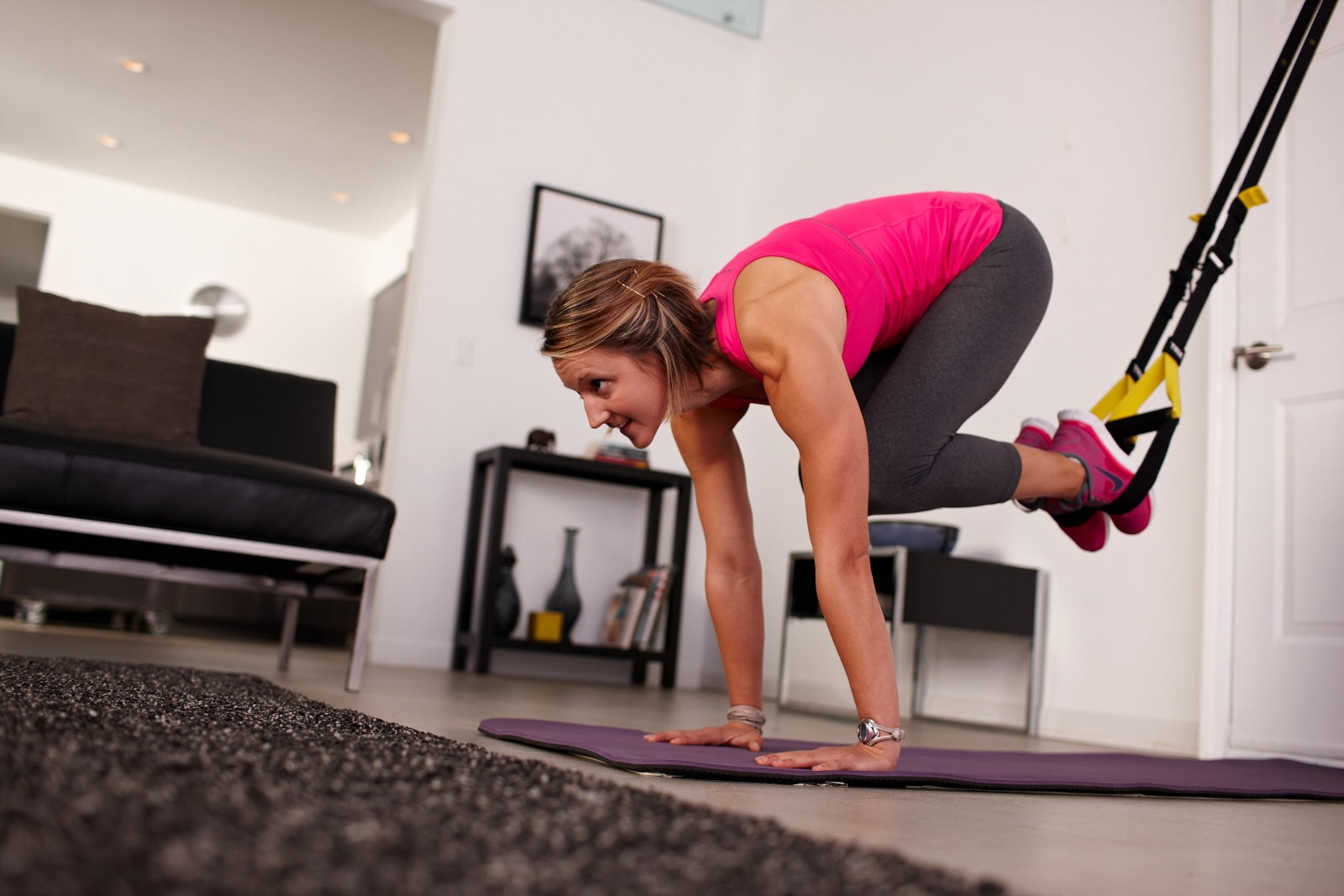
Prefer to stick with an all-in-one solution for your small space? Think about the TRX Suspension Trainer, a full-body tool that adapts to any and every body. It’s easy to adjust how much bodyweight you apply to your “load” with the Suspension Trainer—simply adjust your angle by taking a step forward or back—so you can make exercise easier or harder without upgrading to a new tool. Plus, the straps easily fold into a small carrying pouch, so you can take or store them anywhere.
Almost any space, even a studio apartment, can accommodate a home gym. When the commute to exercise is standing between you and your fitness goals, it’s time to stop scheduling your life around business hours, and start bringing the gym to you.

How to Communicate More Effectively
You’ve spent plenty of time and money learning how to develop life-changing training programs. You can assess physical function at a glance. You get goosebumps when calculating VO2 Max. But all of that means nothing if you aren’t able to effectively communicate what you know with your clients.
Of all traits that make up a qualified coach, communication is at the top of the list. That's why we've compiled our best tips for becoming a top-notch communicator. And since every coach's style and every client's needs differ, we recommend taking our quick fitness coaching assessment quiz to receive personalized communication and exercise guidance tailored to your specific goals. Whether you're training elite athletes or helping beginners start their fitness journey, these proven communication strategies will help you connect with and motivate your clients effectively.
TAKE OUR TRAINING QUIZ
Focus on the Foundations.
If you’ve gone through any of our courses, you know that TRX has developed a standard system of cueing to guide individuals through each movement. Known as NAPS-MR, there are six elements that ensure that your clients and class participants understand and complete each exercise safely and in uniform fashion.
NAPS-MR, which is an acronym for Name the Exercise, Adjustment, Placement, Start, Movement and Return, includes all the steps that will get your client through the exercise, from A to Z.
Here’s an example:
N: TRX Inverted Row
A: Over shortened
P: Ground facing
S: Chest below anchor, arms extended over chest, knees bent to 90 degrees, shoulders should be positioned slightly lower than hip, hips pressed up, chest lifted
M: Drive elbows back, pull body towards anchor point, keep knees bent at 90 degrees, maintain plank
R: Lower body down until arms are fully extended, maintain plank
On a side note, it’s important to notice the simplicity of the information presented here. It would be easy to overinflate an exercise with loads of cues throughout the movement—squeeze your glutes, draw the belly button into the spine, shoulders back and down, maintain a long spine, for example—but there’s only so much info the human brain can hold onto. And when there are too many balls in the air at a time, the likelihood of dropping all of them increases. Practicing NAPS-MR helps to avoid information overload for simple, high-quality movement.
Understand Your Audience.
Tony Robbins is arguably one of the most effective speakers and influencers around today. One of the traits that helped him build such a robust following—each of his live events bring in anywhere from 5,000 to 10,000+ audience members—is his ability to appeal to each individual.
He says, “To effectively communicate, we must realize that we are all different in the way we perceive the world and use this understanding as a guide to communicate with others.”
Not everyone responds to language and cues in the same way and so it’s up to you to figure out what makes your client tick and then adjust your language accordingly.
You may be an anatomy buff and know exactly what it means when someone asks you engage your lats while in push-up position, but the average client might not.
And while you could spend a good 20 minutes schooling them on anatomy and optimal structural function, it’s a lot easier and less time consuming to instead ask them to bring their shoulder blades toward their back pockets or corkscrew the hands into the floor. This is the primary concept behind our “Swing Thoughts” which were designed to create a visual reference/guide to help everyone understand exactly what is expected in an efficient and easily understood way.
Experiment with your language choices and notice your client’s responses to them. When you describe an exercise, do their eyes glaze over or do you see a lightbulb? In the same way that you assess movement patterns and adjust your movement plan accordingly, assess how your words resonate with clients and adjust your language choices, if necessary.
Visual Learning.
It can be endlessly frustrating trying to describe to a client his movement dysfunction. When performing an overhead squat, it’s easy for you to see that they have a left lateral shift in their hips, the right knee is valgus and they lack thoracic extension. If you try to explain it this way you might as well be speaking to them in gibberish. Even if you say that the right knee caves in and the upper-back rounds during the movement, the most adept client might not be able to grasp what you mean.
This is where a simple photo or video comes in handy.
Some people are visual learners, plain and simple. In these cases, showing instead of telling can give clients better insight into structural inefficiencies.
TRX Maps, for example, solves this problem by showing users exactly where the dysfunctions present and then offers solutions on what can be done to move more efficiently—all in a matter of seconds.
Should you not have TRX Maps at your disposal, your phone’s camera can also provide your client with both static (photo) and moving (video) feedback.
Be the Experience.
As the old proverb goes, being an effective communicator isn’t just about what you say, it’s about how you say it.
That’s where the phrase, “Be the experience” comes from.
Taking a client or class through a training session is about more than connecting a series of exercises together.
In order to affect real change, you have to create an experience that helps clients fully engage with a workout. How you do that depends on your coaching style.
We’ve defined three different coaching styles: The Sensei, the Coach and the Cheerleader. The Sensei, for example, is all about instruction, whereas the Coach inspires and the Cheerleader motivates. The Sensei looks at movement accuracy and precision, the Coach aims for form and intensity and the Cheerleader focuses on emotion and energy.
There is no one best approach and not everyone will be good at all three.
The best coaching style for you is the one that feels the most true to self. People have strong BS meters and will know right away when you try to be something you’re not. However, when you define which style or styles fit you best—you might choose more than one—then you’ll develop a stronger ability to connect with clients and guide them toward success.
Knowledge may be power, but it’s how you communicate that knowledge that sparks real, lasting change.
To learn more about the best ways to communicate with your clients check out TRX Education.
Click here to check out TRX Education in the US!
Click here to check out TRX Education in the UK!