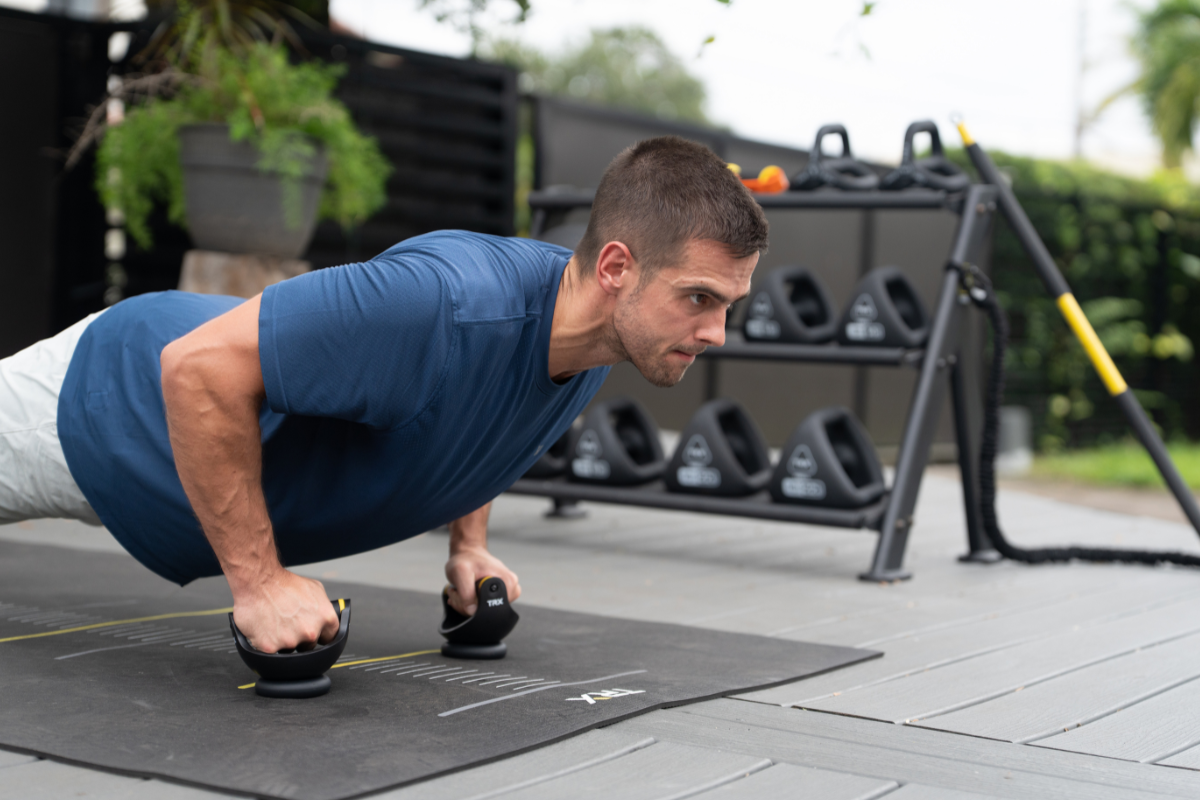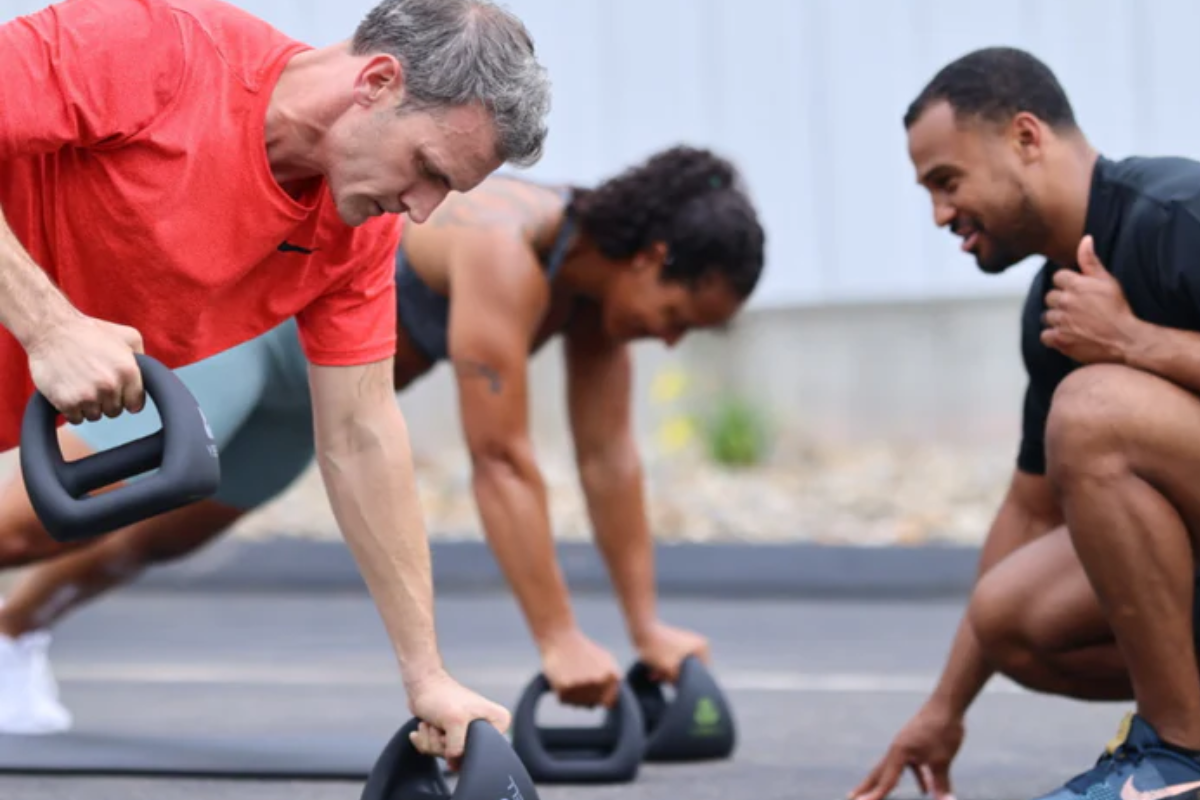

Ever tried balancing on two unstable surfaces at once?
That's dual instability training, and when you combine TRX straps up top with Push-It sliders below, you're creating independent instability at both contact points simultaneously.
This isn't just another workout trend. Research shows dual instability fires up more muscle activity (EMG activation), demands serious core engagement, and forces your entire body to work as one stabilizing unit, way more than regular or single-instability exercises ever could.
Ready to discover why this combo might be the game-changer your workout needs? Let's dive in.
What Is Dual-Instability Training?
Dual instability training means your hands and feet are both on unstable surfaces at the same time. Your body has to fight wobbles from multiple directions simultaneously.
Think of it like trying to write your name while standing on a skateboard. Now imagine the pen is also moving around. That's the kind of chaos your muscles deal with during instability training work.
With TRX straps, your hands grip handles that swing and rotate freely in space. Add Push-It sliders under your feet, and now your lower body slides across the floor in any direction while your upper body fights the suspension straps.
How Dual Instability Increases Your Muscle Activation
Studies measuring muscle electricity (EMG) show a clear pattern: stable exercises activate muscles the least, single-instability exercises activate them more, and dual-instability exercises activate them the most. Your core muscles especially go into overdrive.
The same pushup that feels easy on solid ground becomes a full-body emergency when both contact points are unstable. Your nervous system recruits more muscle fibers just to keep you from face-planting.
That means better strength gains, better coordination, and muscles that actually know how to work together instead of just looking good in isolation. These stability muscles are truly functional muscles that translate to real-world movement patterns.
Why Dual-Instability Training Is Beneficial
Science backs up what your shaking muscles already know: training with multiple unstable points delivers measurable performance improvements. Researchers tracking athletes through unstable training programs consistently find the same results.
Better balance scores, stronger core tests, and improved movement control all show up after just a few weeks of dual instability training work.
Core Engagement and Trunk Stability Increase
Your deep core muscles fire differently when fighting instability from both ends. TRX straps try to pull you forward or sideways, while Push-It sliders want to shoot your feet out from under you.
Your core has to resist rotation AND prevent your spine from extending or collapsing all at once. This isn't the superficial burn you get from crunches. It's your transverse abdominis, multifidus, and obliques (AKA, all those core muscles) working overtime to keep your spine neutral.
Athletes who train this way show better spine stability during impact sports and lower rates of back injuries. Your body learns to brace properly without you thinking about it. Your muscles become your built-in back brace, similar to joint strengthening exercises that protect vulnerable areas.
Gain More Upper-Body Strength Through Stabilizer Recruitment
Unstable surfaces wake up sleeping shoulder muscles. Those small stabilizers around your shoulder blades usually slack off during regular bench presses or rows.
Add TRX instability, and suddenly your serratus anterior, lower traps, and rotator cuff muscles (all those shoulder muscles, small and large) have to work just to keep the straps from wobbling. Research consistently demonstrates significantly higher activation in these stabilizer muscles during unstable pushing and pulling movements compared to stable surface training.
Your big muscles still do the heavy lifting, but now they have proper support from the little guys that usually get ignored. These stabilization workouts build the kind of strength you need for shoulder stability in real-world activities.
Improved Balance, Coordination & Motor Control
Two instability sources force your brain to work harder than your muscles.
Your nervous system processes feedback from wobbling hands AND sliding feet simultaneously, then coordinates corrections faster than you can consciously think. This neural training transfers to real life and sports, much like ankle stability exercises improve proprioception throughout your lower body.
Athletes training with dual instability show faster reaction times and smoother movement patterns. Your body stops moving in rigid, robotic patterns and starts flowing through complex movements naturally.
Necessary Safety & Foundational Technique Principles
You need to earn the right to train with dual instability. Jumping straight into TRX and Push-It combos without preparation is like trying to juggle chainsaws before learning to juggle tennis balls.
Your body needs specific strength foundations before adding chaos from both ends. Most people aren't ready, even if they think they are.
Control First, Then Instability
Can you hold a perfect plank for 60 seconds without your hips sagging or rising? Can you do 10 strict pushups with your body moving as one solid unit? If not, you're not ready for dual instability. Your core should feel like it's wrapped in steel cables when you brace.
Test yourself: get into a plank and have someone gently push your hips from the side. If you wobble like jello, stick with stability exercises on stable ground first. When you do progress to dual instability, move like you're performing surgery.
Slow, deliberate movements only. Speed comes months later, after your nervous system adapts. Fast, sloppy reps on unstable surfaces don't make you athletic. They make you injured.
Count three seconds down, pause, three seconds up on every rep. If you can't maintain this tempo, the exercise is too hard, or you're too fatigued to continue safely.
10 Dual-Instability Exercises That Work Using Suspension + Push-It
This set of exercises will help you work and build your stabilizer muscles. Remember to start slow and build from there.
1. Suspension + Push-It Plank Hold
Static plank with hands gripping TRX handles and feet balanced on Push-It sliders.
How to do it:
-
Set TRX straps to mid-length and place Push-It sliders shoulder-width apart
-
Grip the TRX handles and place your feet on sliders in plank position
-
Brace core and hold body in a straight line from head to heels
-
Fight wobbles from both ends for 20-30 seconds
2. Push-It Suspended Push-Up
Push-up with hands sliding on Push-It and feet swaying in TRX straps.
How to do it:
-
Place feet in TRX foot cradles and hands on Push-It sliders
-
Set up in push-up position with rigid body alignment
-
Lower chest toward the floor with a 3-second descent
-
Press up while preventing hand slides and foot sway
-
Regression: elevate hands on the box; Progression: slide hands outward at the bottom
This variation builds on foundational TRX push-up techniques while adding dual instability for maximum challenge.
3. Suspended Single-Leg Knee Tuck on Push-It
Core exercise driving one suspended knee to the chest while the other foot stabilizes on a slider.
How to do it:
-
Place the right foot in the TRX strap, left foot on the Push-It slider
-
Assume plank position with hands on the floor
-
Pull the suspended knee toward the chest while the sliding foot stays stable
-
Extend the leg back to the start position with control
-
Regression: both feet in TRX; Progression: add push-up between tucks
4. Push-It Pike with Suspended Feet
Moving pike where hands slide forward while feet hang in straps.
How to do it:
-
Set feet in TRX straps and hands on Push-It sliders
-
Start in plank position with straight arms
-
Slide hands forward while driving hips up to pike
-
Pull your hands back to return to the plank
-
Regression: hold static pike; Progression: single-leg suspended pike
5. Suspension Chest Fly + Push-It Stability Hold
Standing chest flies while balancing on sliding platforms.
How to do it:
-
Stand in a split stance with the front foot on the Push-It slider
-
Grip the TRX handles with arms extended forward at chest height
-
Open arms wide into a fly position while maintaining foot position
-
Squeeze the chest to return the handles to the center
-
Regression: remove Push-It; Progression: single-leg on slider
For more chest-focused stability workouts, explore resistance band chest exercises as complementary training.
6. Push-It Dynamic Mountain Climbers (Feet Suspended)
Rapid knee drives with hands fighting slides and feet swinging.
How to do it:
-
Place feet in TRX straps and hands on Push-It sliders
-
Set a strong plank position with engaged core
-
Drive the right knee toward the chest, then quickly switch to the left
-
Maintain a steady hand position on the sliders throughout
-
Regression: hands on floor; Progression: add lateral hand slides
7. Suspension Lunge with Push-It Front Foot
Split lunge with the rear foot suspended and the front foot sliding.
How to do it:
-
Place the rear foot in the TRX strap behind you
-
Position the front foot on the Push-It slider
-
Lower into a lunge while controlling the front foot slide
-
Drive up through the front heel to return to the start
-
Regression: remove Push-It; Progression: add lateral slide during lunge
This movement pairs well with resistance band leg exercises for comprehensive lower body development.
8. Push-It Lateral Plank Walk with Suspended Hands
Side plank walking your feet laterally, while your hands grip swinging straps.
How to do it:
-
Grip the TRX handles in the plank position
-
Place feet on Push-It sliders hip-width apart
-
Walk feet laterally 3 steps right while maintaining the plank
-
Walk 3 steps left to return
-
Regression: TRX only; Progression: add hip dips between steps
9. Suspension Row with Push-It Foot Instability
Pulling exercise combining TRX rows with a sliding foot platform.
How to do it:
-
Grip the TRX handles facing the anchor point
-
Place feet on Push-It sliders and lean back to row position
-
Pull chest to handles while feet fight to stay centered
-
Lower with control as feet maintain position
-
Regression: feet on ground; Progression: single-leg on slider
Balance this pulling work with resistance band back exercises for complete posterior chain strength.
10. Push-It Burpee with Suspension Push-Up
Full-body explosive move combining burpee with suspended push-up, similar to tandem pushups that require coordinated upper and lower body control.
How to do it:
-
Start standing with Push-It sliders at feet, TRX handles nearby
-
Place feet on sliders and slide back to plank
-
Grab the TRX handles and perform one suspended push-up
-
Release handles and slide feet forward to squat
-
Regression: step back, skip push-up; Progression: add knee tuck before standing
Programming Dual-Instability Workouts
Now that you know what some exercises are that build dual instability, time to plug them into some stability workouts. Let's get started:
Beginner (2x/week, 15 minutes)
-
Start with 3 exercises, 2 sets each.
-
Plank Hold (20 seconds)
-
Suspension Row with Push-It (8 reps)
-
Modified Push-Up with knees on Push-It and hands in TRX (5 reps)
-
Rest 60 seconds between everything.
-
Your muscles will shake like a washing machine on a spin cycle. That's normal. Consider starting with this 10-minute workout at home structure to build foundational fitness.
Intermediate (3x/week, 25 minutes)
-
Circuit format with 4 exercises, 3 rounds:
-
Mountain Climbers (20 reps)
-
Pike with Suspended Feet (10 reps)
-
Chest Fly + Push-It Hold (12 reps)
-
Lateral Plank Walk (6 steps each way)
-
Rest 45 seconds between exercises, 90 seconds between rounds.
Advanced (4x/week, 35 minutes)
Superset pairs with 5 exercises total.
-
Pair 1: Burpee with Suspension Push-Up (8 reps) into Single-Leg Knee Tucks (10 per leg)
-
Pair 2: Suspension Lunge (12 per leg) into Push-It Suspended Push-Ups (15 reps). Finish with Plank Hold for max time.
-
Rest 30 seconds between exercises, 60 seconds between pairs.
Notice how advanced doesn't mean doing circus tricks on the equipment. It means perfect form under fatigue, controlled tempo when your brain wants to rush, and maintaining tension when every fiber screams to quit.
The beginner doing slow, perfect reps builds more strength than the show-off bouncing through sloppy movements. This principle applies whether you're training in a small space workout or a full gym.
Progression Framework (Beginner to Intermediate to Advanced)
-
Shorten TRX straps gradually: Start with straps at mid-length where handles reach your ribcage. Every two weeks, raise them one adjustment hole until handles are at hip height. Shorter straps equal more instability and greater angle challenges.
-
Narrow your base: Begin with feet hip-width apart on Push-It sliders. Progress to feet together, then staggered stance, finally single-leg variations. A wider base means more stability. A narrow base means your core works harder to prevent tipping.
-
Slow everything down: Beginners use 2-second lowering phases. Intermediate extends to 3 seconds down, 1-second pause, 2 seconds up. Advanced athletes work with 5-second eccentrics. Time under tension matters more than rep count.
-
Add holds at the hardest positions: Start by holding the end positions for 1 second. Build to 3-second holds at the bottom of push-ups or the top of rows. These pauses eliminate momentum and force honest strength.
-
Stack instability last: Master each exercise on stable ground first, then single instability (just TRX or just Push-It), finally combine both. Adding dual instability to bad form just reinforces terrible movement patterns at higher neural demand. Note that "instability vs unstability" is often debated, but the correct term is instability.
Who Dual-Instability Training Benefits the Most
Dual instability training works best for athletes in rotational sports (tennis, golf, baseball), runners wanting injury prevention, CrossFitters, and obstacle racers.
It also helps people rehabbing shoulder injuries (consult your doctor first), military personnel training for unpredictable terrain, and desk workers fixing their dead cores. This type of stabilization workout can even support recovery routines when scaled appropriately.
Skip it if you have active injuries, can't do 10 proper push-ups, or think complicated equals better.
Ideal Use Cases
Contact sport athletes need this to handle hits from weird angles, much like practitioners of MMA workout programs require multi-directional stability.
Rock climbers and surfers already train instability naturally, so adding structured dual work accelerates their progress.
Anyone past basic rehab for ACL or ankle injuries rebuilds proprioception faster with controlled dual instability. Make sure you consult your doctor before starting out. Check out resources on TRX for injury rehab for guidance.
Manual laborers and first responders benefit since their jobs involve unstable surfaces daily.
Functional fitness competitors who skip this training fail when competitions add complexity.
Ready to Level Up Your Stability Game?
Before discovering dual instability training, you were probably stuck with standard exercises that left stabilizer muscles asleep and your core half-engaged. Your workouts trained muscles in isolation while your nervous system coasted on autopilot.
Now you understand how combining TRX Suspension with Push-It sliders creates simultaneous instability that forces every muscle fiber to fire and your brain to work overtime coordinating movement from both ends.
Your path to better performance isn't adding more weight or complicated exercises. It's progressively challenging your body's stability systems through controlled chaos.
Start with single exercises, master the movement patterns, then gradually combine TRX and Push-It when you're ready. Your muscles will shake, your brain will struggle, and that's exactly when the magic happens.
This isn't just harder training; it's smarter training that builds the kind of functional strength that actually transfers to real life. Whether you follow a 4-week workout plan or integrate these moves into your current routine, dual instability training delivers results you can feel and measure.
References
American Council on Exercise. "7 Core Stability Exercises." ACE Fitness, www.acefitness.org/resources/everyone/blog/6313/7-core-stability-exercises. Accessed 13 Dec. 2025.
University of Washington Orthopaedics and Sports Medicine. "Home Exercises for the Unstable Shoulder." UW Medicine, orthop.washington.edu/patient-care/articles/shoulder/home-exercises-for-the-unstable-shoulder.html. Accessed 13 Dec. 2025.